
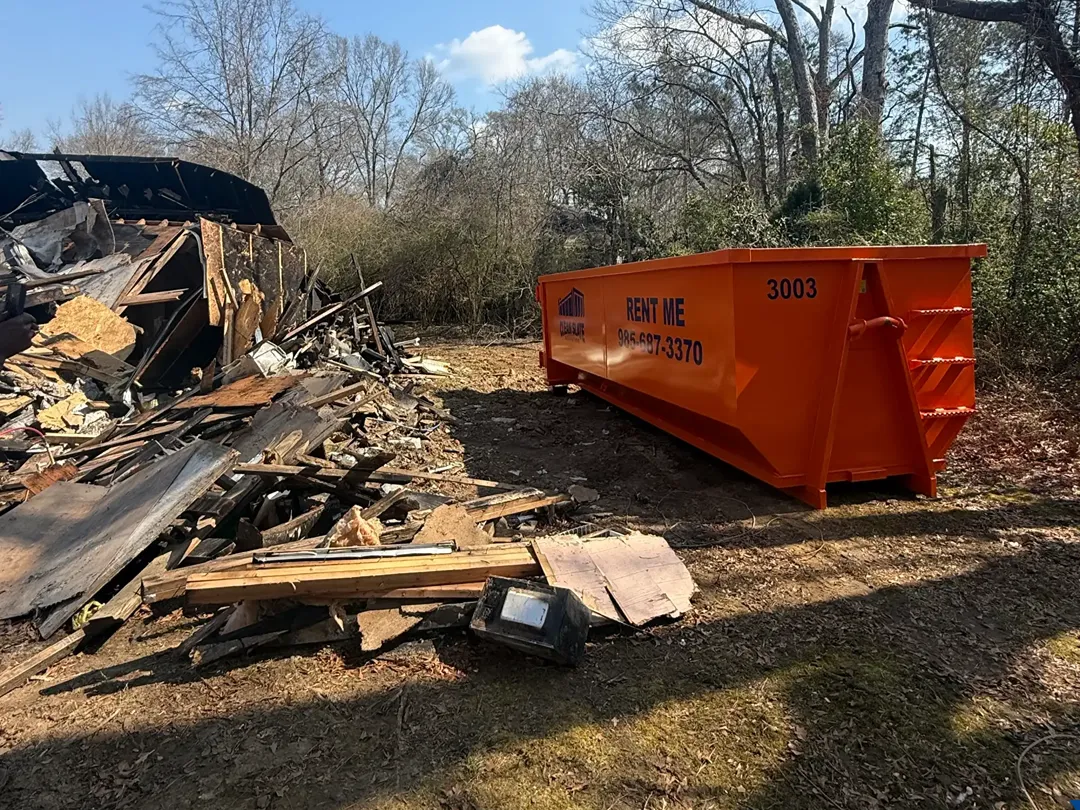
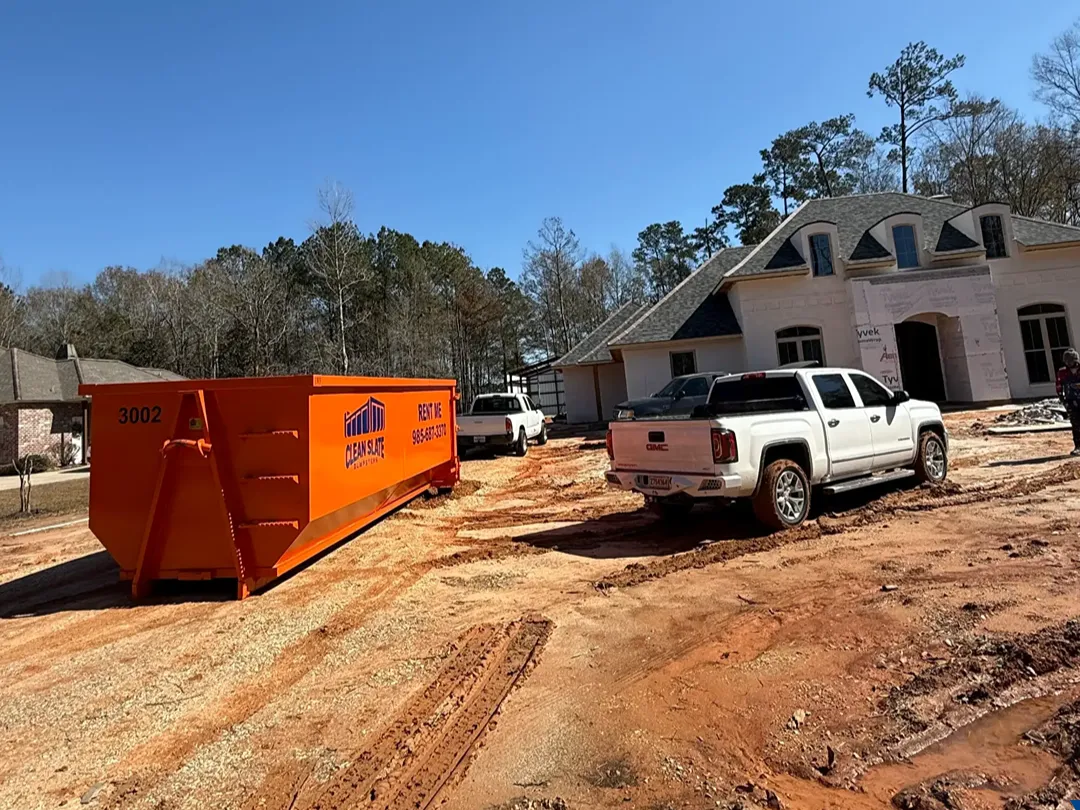
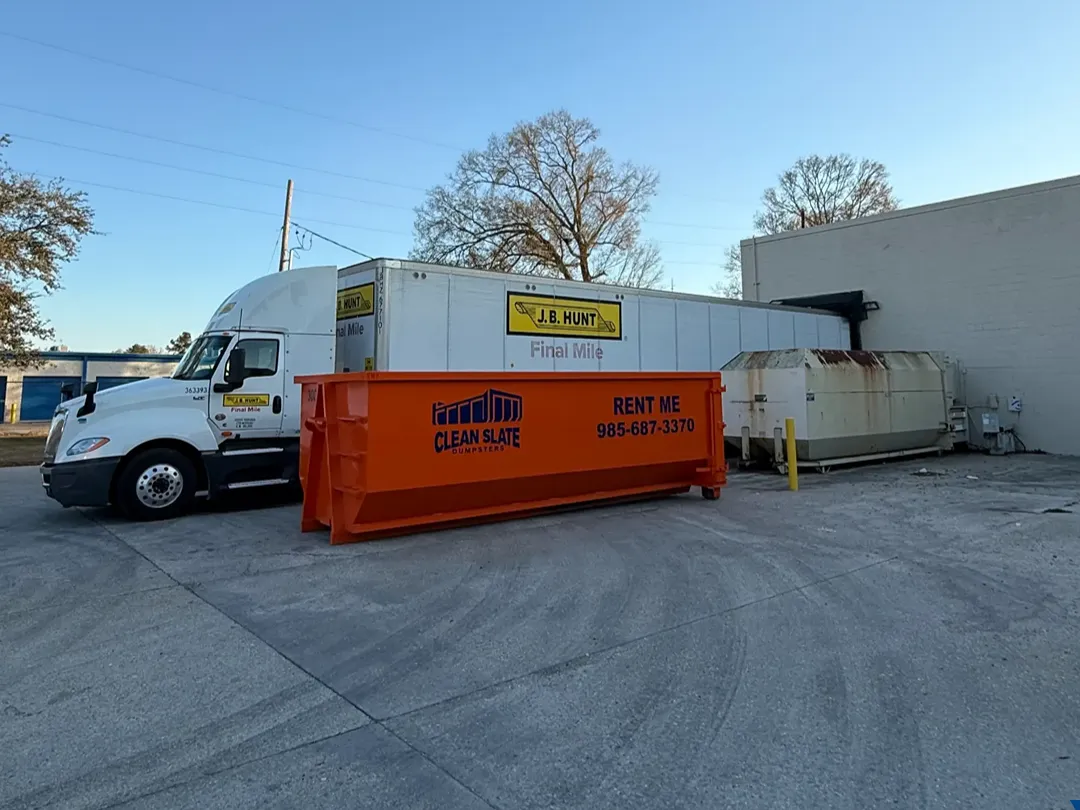
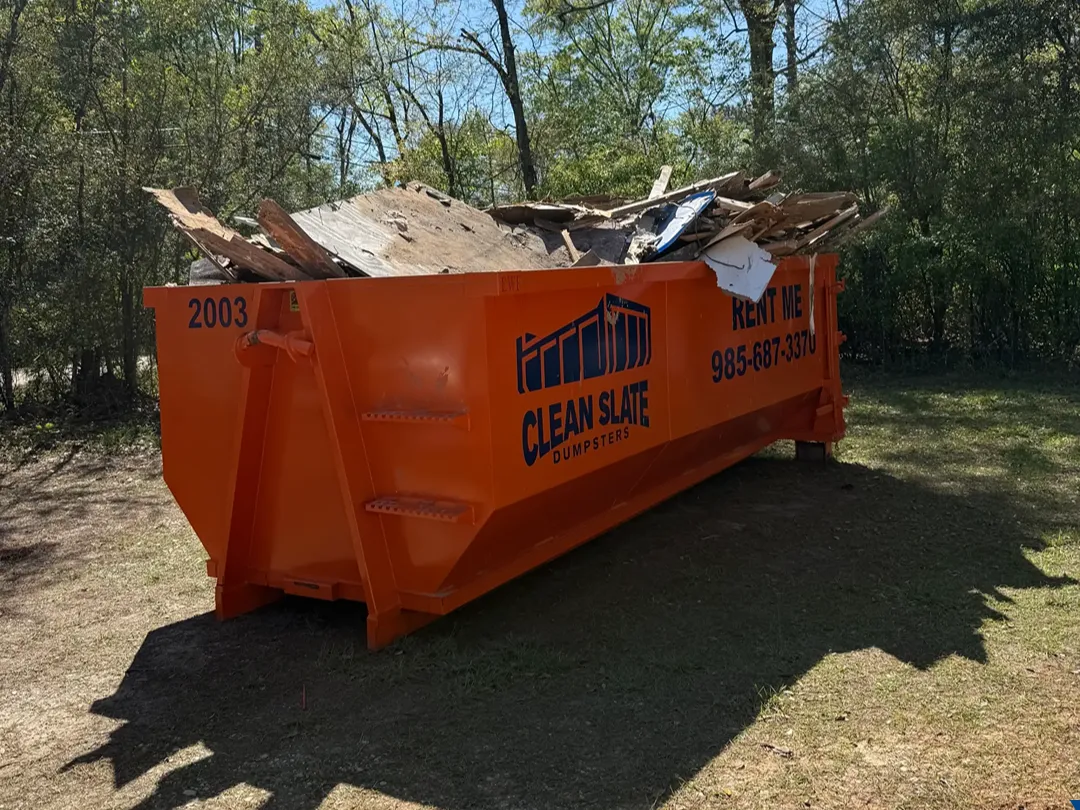
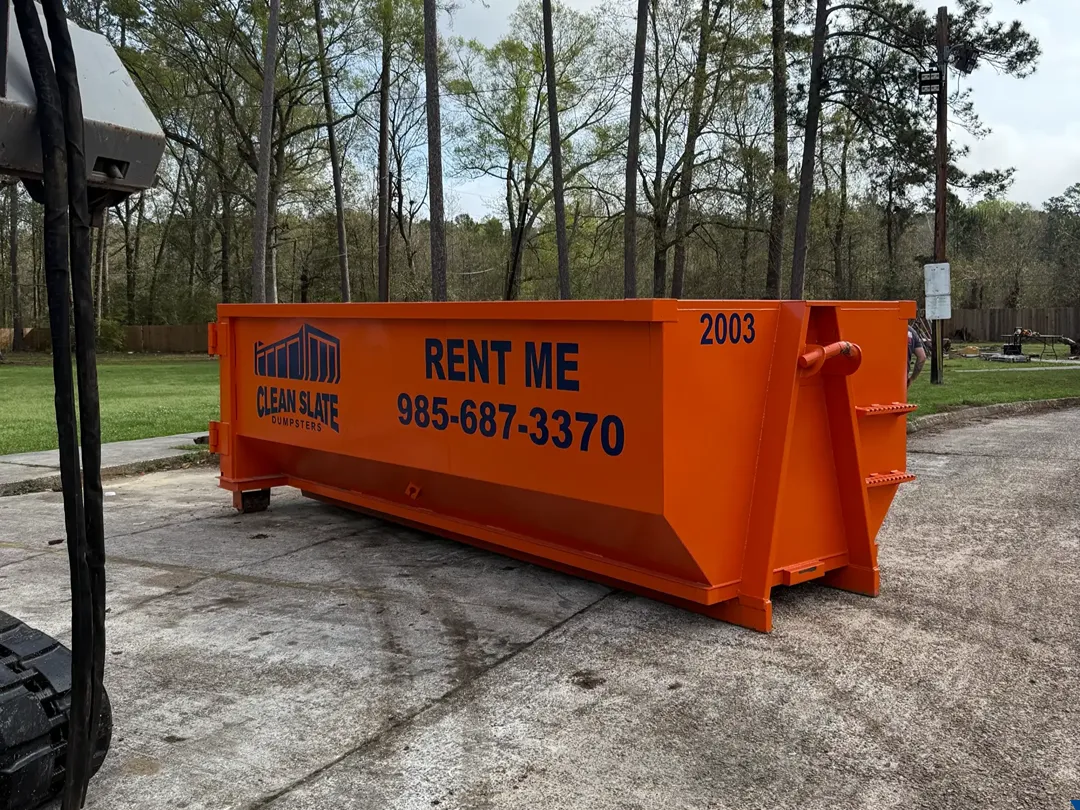
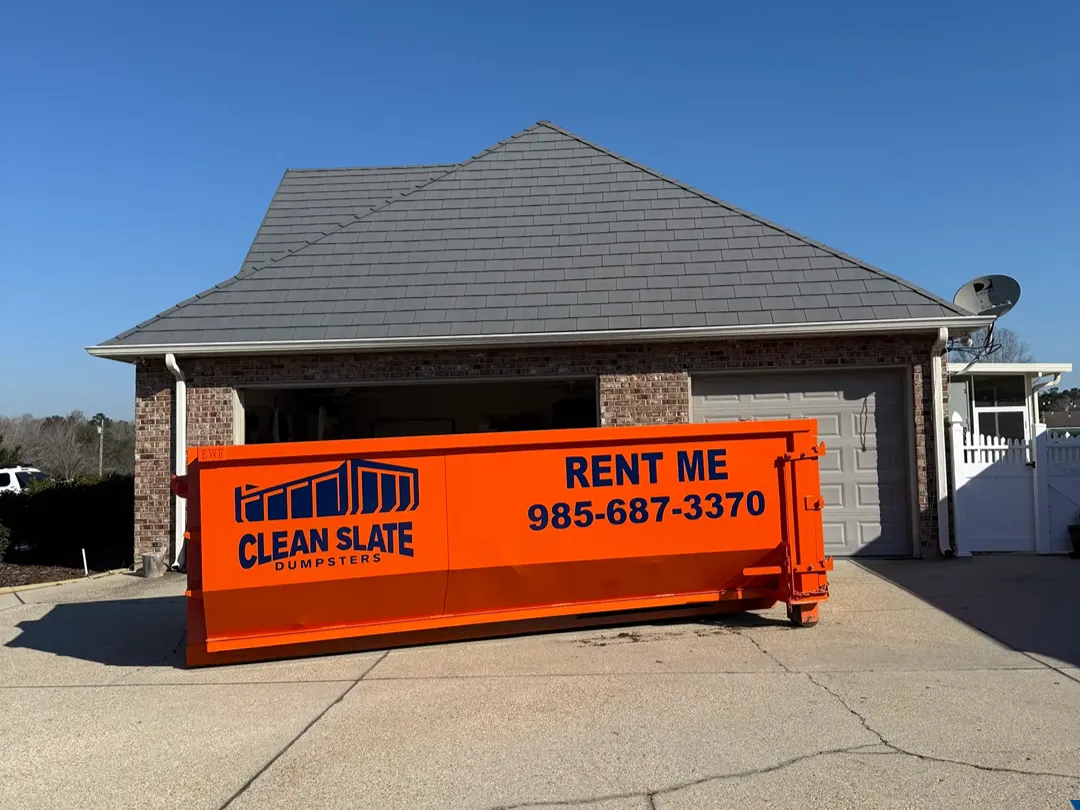
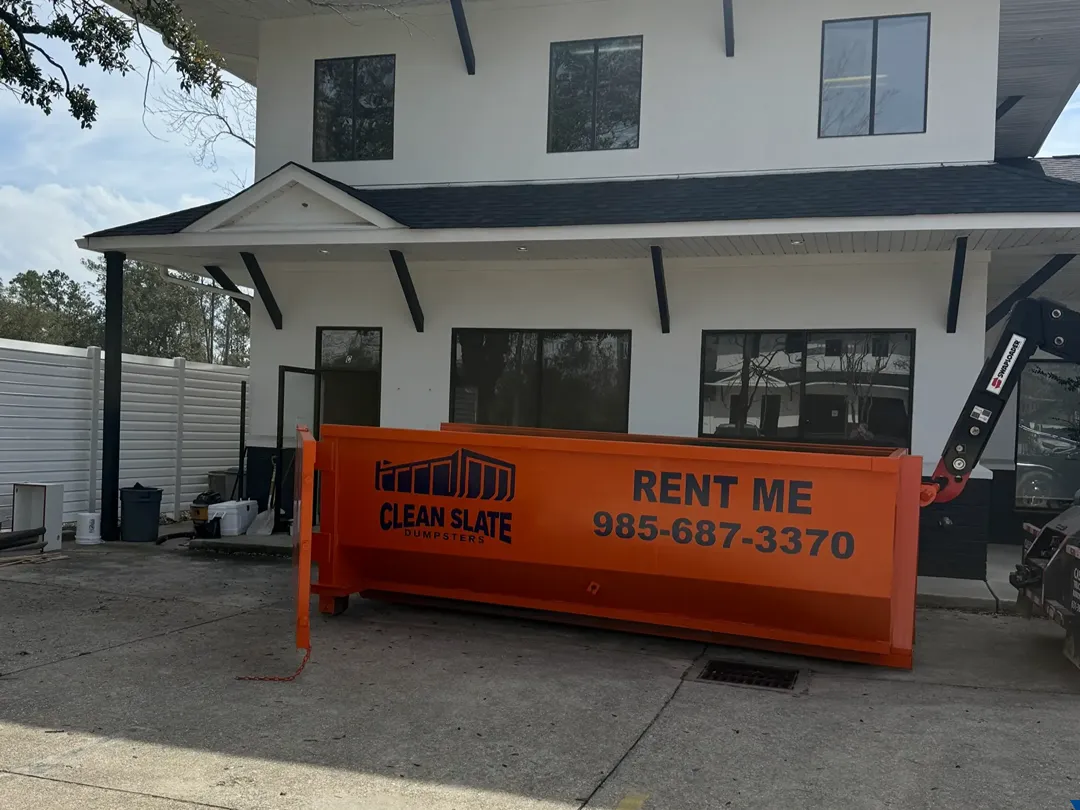
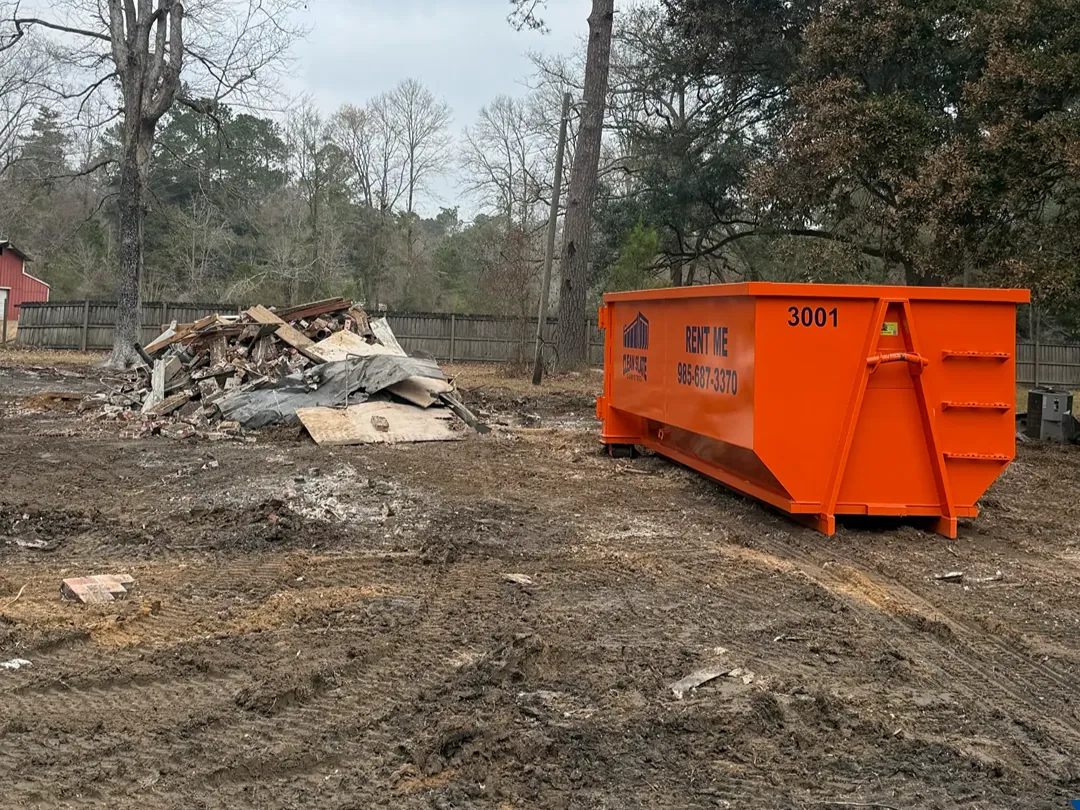
For most 3-bedroom home cleanouts in Hammond, a 20-yard dumpster is the right size. It holds roughly 6 pickup truck loads and includes 2 tons. A single garage or attic fits a 15-yard dumpster. Full estate clearances with heavy furniture and appliances throughout need a 30-yard dumpster. Size it right the first time. At $65/ton overage, guessing low costs more than guessing high.
For most home cleanouts in Hammond, a 20-yard dumpster is the right call. The problem is choosing the wrong costs you twice: once for the wrong container, and again for the overage fee when it weighs out heavier than expected. This guide tells you exactly which size fits your project, with weight estimates by item type so you’re not guessing at the landfill scale.
For the complete sizing overview across all project types, see the full Hammond dumpster sizing guide.
A 20-yard dumpster is sufficient for most 3-bedroom cleanouts in Hammond. Here’s the full breakdown by project type, based on industry volume and cleanout sizing guides.
| Cleanout Type | Recommended Size | Est. Cubic Yards | Pickup Truck Loads |
|---|---|---|---|
| Single garage | 15-yard | 8-12 | 3-4 |
| Attic + 1-2 rooms | 15-yard | 10-14 | 4-5 |
| 2-bedroom home | 20-yard | 14-18 | 5-6 |
| 3-bedroom home (typical) | 20-yard | 16-20 | 6-7 |
| Full estate / heavy furniture throughout | 30-yard | 22-28 | 8-10 |
If your project falls between two rows, size up. The overage fee costs more than the next-size upgrade in almost every scenario.
[PERSONAL EXPERIENCE] In Tangipahoa Parish, homeowners consistently underestimate how much a full garage adds to a whole-house cleanout. A two-car garage alone can push a project that looks like a 20-yard job into 30-yard territory once the appliances and furniture are accounted for.
Weight surprises most first-time renters more than volume. A dumpster fills up visually, but the overage charge comes from the scale at the landfill, not from how full the container looks. The Tangipahoa Parish Landfill charges $37.97/ton for in-parish residential disposal. That rate forms the basis of every overage fee for a Hammond cleanout. It’s a pass-through, not a penalty.
At $65/ton overage, two extra refrigerators pay for themselves in overage charges if you sized wrong going in.
A 3-bedroom cleanout with one refrigerator, one washer/dryer, three sofas, and three mattresses works out to roughly 1,100-1,500 lbs in appliances and furniture alone, before you add a single box or bag of general household items. A 20-yard container holds 2 tons, so most standard 3-bedroom cleanouts fit within that limit. But appliance-heavy homes should confirm the count before booking.
Wet or water-damaged debris is the other variable people miss. Soaked insulation, saturated mattresses, and waterlogged furniture weigh 2-3x as much as when dry. If you’re cleaning up after a flood or a roof leak, size up at least one container size.
[UNIQUE INSIGHT] The $37.97/ton residential tipping fee at Tangipahoa Parish means every extra ton you haul past your included weight costs $37.97 at the gate, plus whatever the hauler’s handling margin is. The Clean Slate overage rate of $65/ton reflects that real disposal cost. Sizing right isn’t just about convenience. That’s the clearest path to paying exactly what you budgeted.
See the current pricing and included tonnage for full weight limit details.
A 15-yard dumpster holds 4 to 6 pickup-truck loads and is the right size for a single garage cleanout, an attic clear-out, or a 1-2-room situation without heavy appliances. It’s the least expensive option and avoids paying for space you won’t use.
For a single-car or two-car garage, a 15-yard dumpster handles tools, sports equipment, holiday decorations, cardboard boxes, and a few pieces of furniture without issue. For a single attic, add old luggage, insulation scraps, and holiday storage. That’s still squarely in 15-yard territory.
A 1-2-bedroom apartment cleanout with minimal appliances fits here, too. Where the 15-yard runs into trouble is weight, not volume. If you’re pulling out a full refrigerator, a washer/dryer, or more than two or three large furniture pieces, move to the 20-yard. The weight risk outweighs the size savings.
A 20-yard dumpster is the right call for most residential cleanouts in Hammond. It holds roughly 6 pickup-truck loads with 2 tons included, and it covers a standard 3-bedroom home from the attic to the garage without needing a second haul.
For a whole-house 3-bedroom cleanout, that means furniture throughout the house, full closets, kitchen items, and whatever’s in the garage. All in one container. Post-estate-sale cleanup falls here, too. After the sale clears, the remainder typically fits a 20-yard without much debate.
Moving cleanouts are another common fit: leaving behind what won’t fit in the moving truck and clearing out the old place before handing back the keys. A 20-yard gives enough room without paying for a 30-yard you don’t need.
When should you size up to a 30? If you’re also pulling out flooring or cabinetry, or if there are heavy appliances in every room, the 20-yard 2-ton limit can get tight.
For a side-by-side comparison of all three sizes with specific project examples, see 15 vs. 20 vs. 30 yard dumpster comparison with Hammond examples.
A 30-yard dumpster is for full estate clearances, hoarding situations, and projects where demo work runs alongside clearing household contents. It includes 4 tons and prevents the second-haul fee that would otherwise be higher than the cost of the size upgrade.
Full estate clearances are the clearest case. Everything from attic to garage: heavy antiques, appliances in every room, decades of accumulated furniture. That consistently pushes past what a 20-yard can handle on weight alone. A 30-yard covers it with room to work.
Cleanout-and-demo combinations are the other major scenario. If you’re tearing out a kitchen or bathroom while clearing the rest of the house, you’re mixing heavy construction debris with household items. That combination almost always needs a 30-yard, sometimes a swap.
High-density or long-neglected properties carry the same risk: what looks like a modest volume haul is often much heavier than it appears. When in doubt, a 30-yard dumpster prevents a stalled project waiting on a second container.
Most household items go in without issue. The exceptions are hazardous materials, which are routed to separate facilities per Tangipahoa Parish Landfill rules. Knowing what’s allowed before you load saves a trip back to pull prohibited items.
Accepted items: – Furniture (sofas, chairs, tables, dressers, bed frames) – Most appliances (refrigerators, washing machines, dryers, dishwashers) – Clothing, boxes, toys, books, general household items – Small amounts of wood or drywall from minor repairs – Bagged household debris – Dried latex paint (see tip below)
Not allowed: – Motor oil, gasoline, and petroleum products – Propane tanks – Wet latex paint (dried latex is fine) – Household chemicals and cleaning solvents – Tires beyond the parish’s daily limit of 5 per vehicle per day – Live or aerosol containers.
The paint tip is worth knowing: spread latex paint thin on cardboard and let it dry completely. Dried latex is accepted as regular debris and requires no special disposal. Kitty litter or commercial drying agents speed up the process.
Electronics, including TVs, computers, and monitors, may require separate e-waste disposal. Check with Tangipahoa Parish solid waste for current drop-off locations before loading them into the container. When you book, confirm prohibited items on your specific load. This list reflects general Louisiana disposal rules and may vary.
Nationally, homeowners pay an average of $385 to rent a dumpster, with most projects falling between $294 and $480, according to national 2025 cost data. Louisiana projects in the Hammond and Baton Rouge corridor typically run $340-$410/week for a 20-yard, per regional cost data.
What’s included in a standard rental: tonnage (2 tons on a 20-yard), delivery, pickup, and the rental period. What adds to the bill: overage at $65/ton after the included weight, extended rental days, and removal of prohibited items if something flagged gets pulled at the landfill.
The Tangipahoa math is worth understanding. At $37.97/ton for residential disposal, a single extra ton generates a real disposal cost that passes through as your overage fee. It’s not a margin item. Sizing right and knowing what’s in your debris are the two most reliable ways to land on your original quote.
How to avoid surprises: size right the first time, account for appliances by weight rather than volume, and don’t wait until the final day to confirm your pickup window.
Check current pricing and included tonnage before booking.
These are the questions that come up before booking a cleanout dumpster in Hammond. If you’re between two sizes, the weight chart above tells you which way to go.
A 20-yard is standard for a 3-bedroom home, roughly 6 pickup-truck loads with 2 tons included. If the house has heavy appliances in every room or you’re also doing demo work, size up to a 30-yard. Light cleanouts in smaller homes often fit a 15-yard dumpster. When in doubt, size up: the overage fee on a too-small container almost always costs more than the next-size upgrade.
For most single-car or two-car garages, yes. A 15-yard holds 4 to 6 truckloads: tools, sports equipment, boxes, and a few furniture pieces. If you’re also clearing an attic or the garage has large appliances, move up to a 20-yard dumpster to stay inside the included weight limit. The 15-yard’s lower cost is only a savings if the weight works.
Clean Slate charges $65/ton after the included weight. On a 20-yard with 2 tons included, that’s $65 per extra ton. The Tangipahoa Parish Landfill charges $37.97/ton for residential debris. The overage fee reflects the real disposal cost, not a markup. Sizing right avoids it, and sizing right starts with counting your appliances and heavy furniture before you book.
Yes. Refrigerators, washing machines, dryers, and dishwashers are accepted. Refrigerators with active Freon may require separate handling in some situations; confirm when you book. Prohibited items include motor oil, wet paint, propane tanks, and tires beyond the parish’s daily limit. When in doubt, ask at booking rather than at pickup.
Rental periods vary. Book for however long you realistically need the container on site. Rushing a cleanout to avoid a day charge typically costs more in time and effort than an extra day on the contract. Confirm the rental window and extension rate when you book so there are no surprises on the back end.
Sizing right on the first call means no second haul, no overage fee, and no stalled project waiting on a swap. Clean Slate delivers to Hammond, Ponchatoula, Covington, Madisonville, Mandeville, Denham Springs, Watson, and surrounding areas on time. No surprises.