
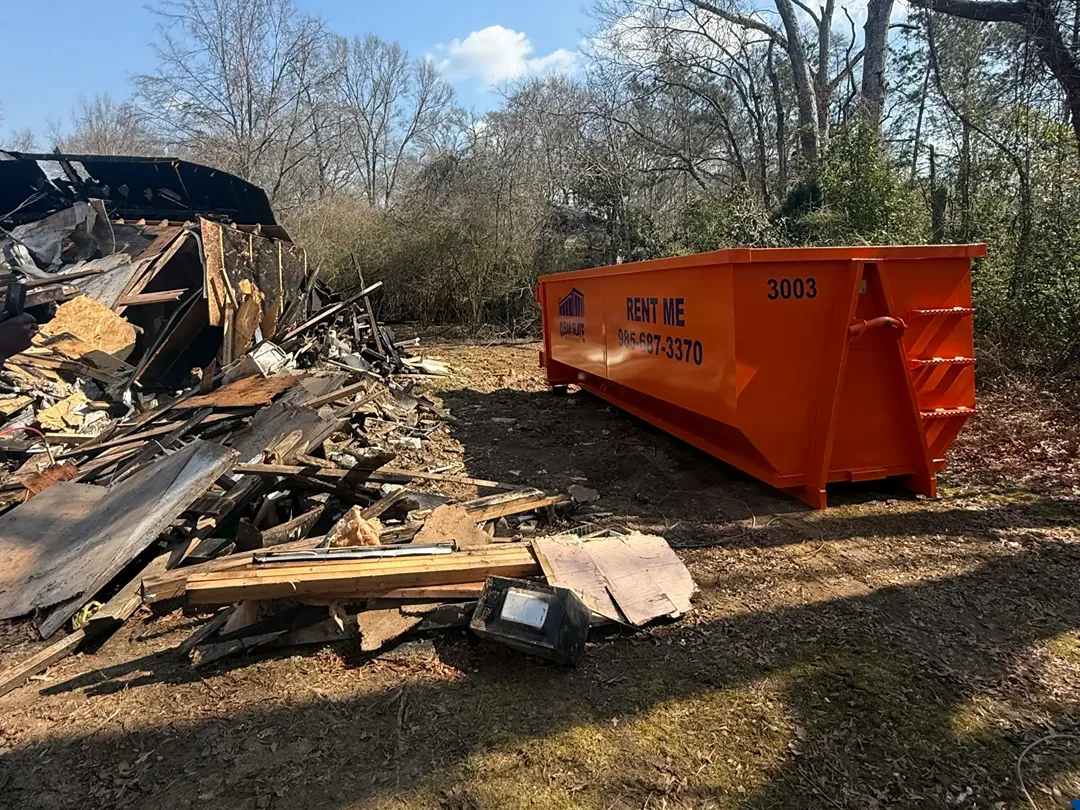
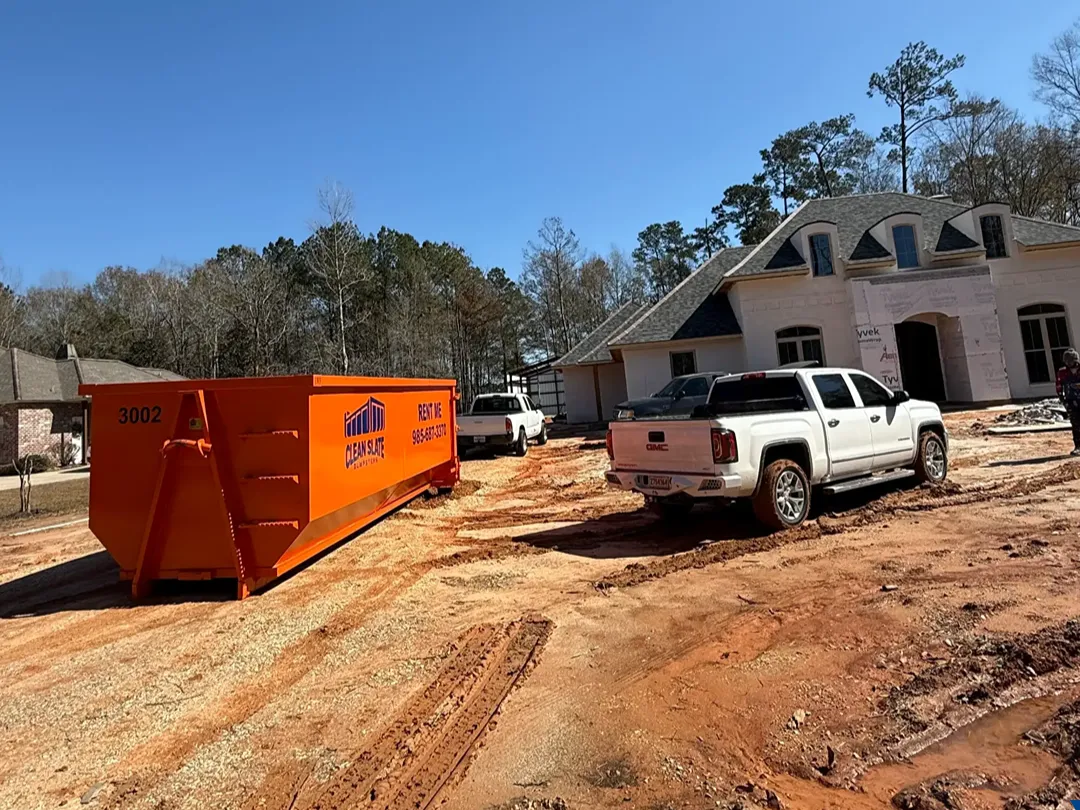
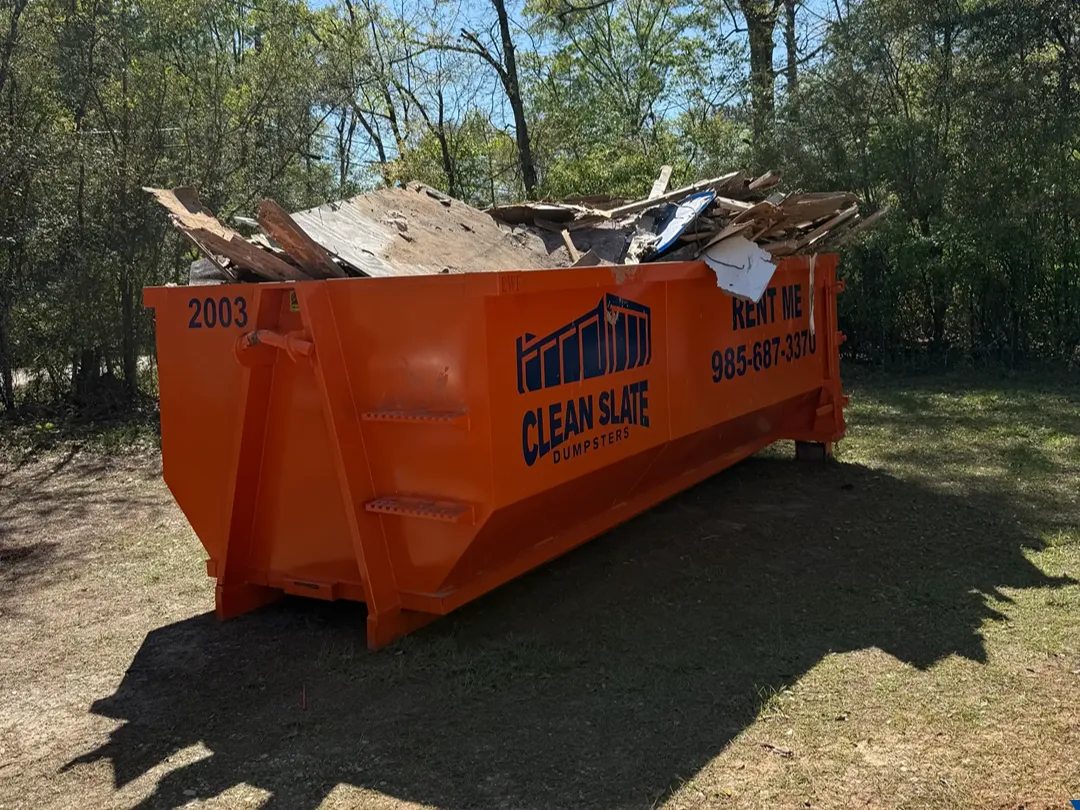
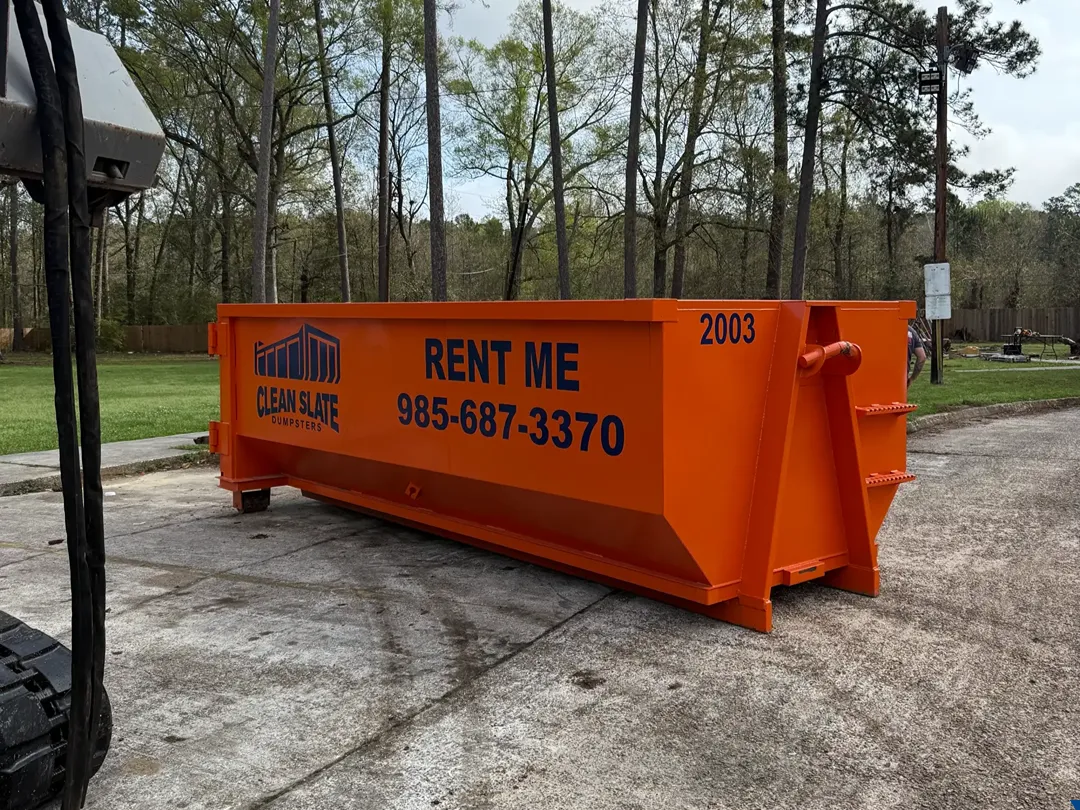
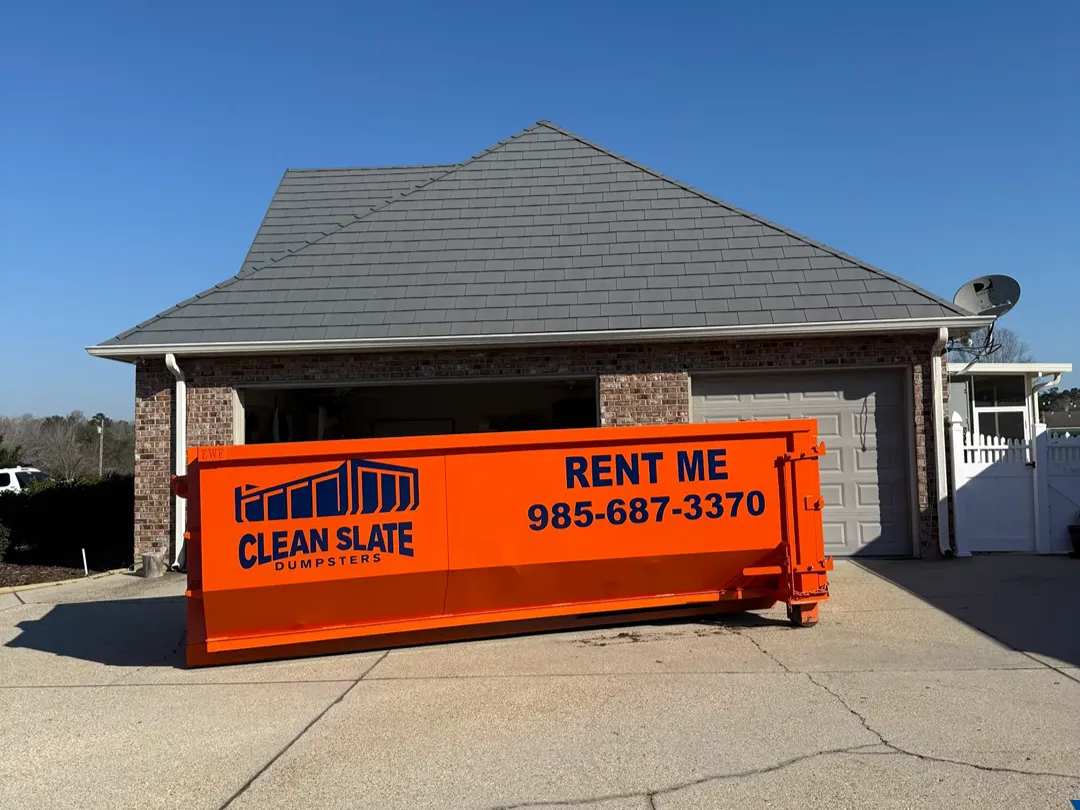
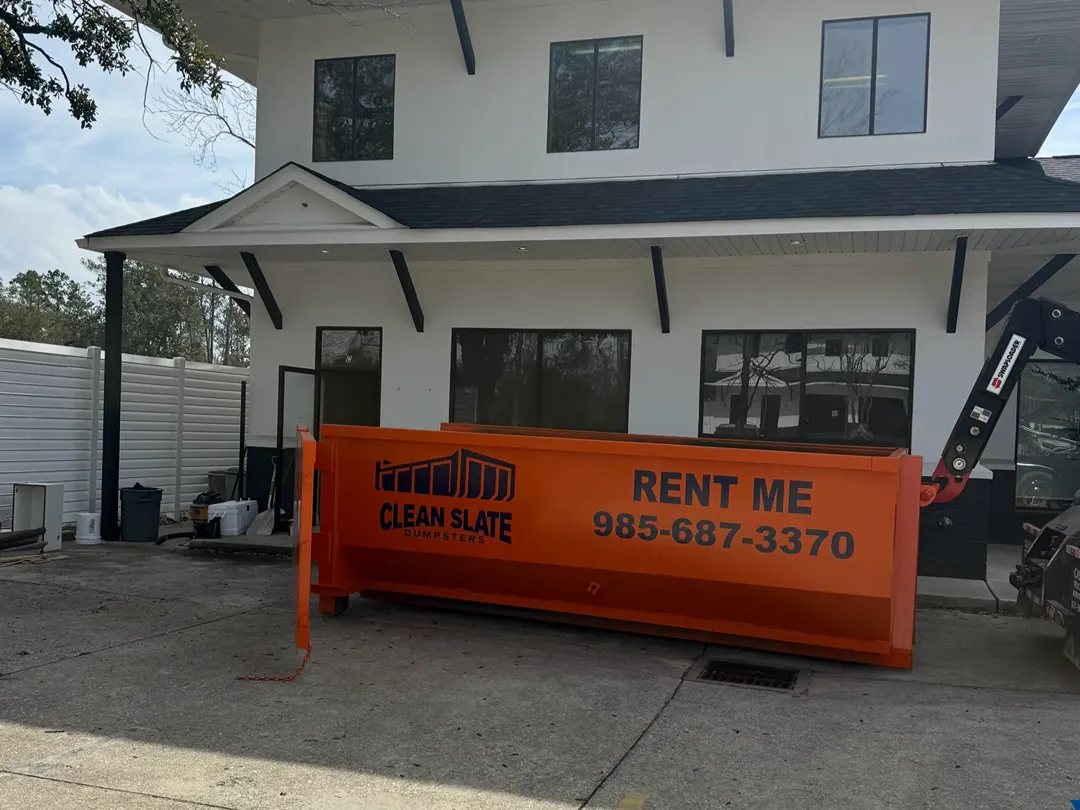
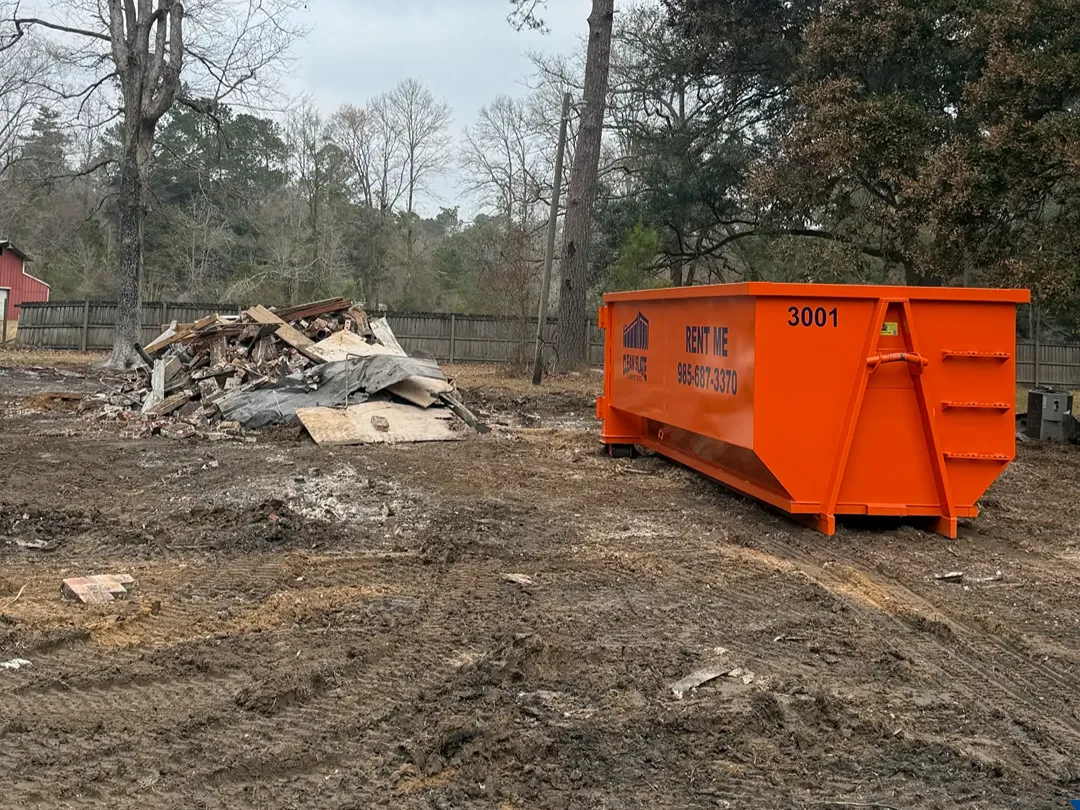
Construction dumpster rental in Hammond comes down to three choices: the size, how long you keep it, and how you handle a full bin. Clean Slate Dumpsters runs 15, 20, and 30-yard roll-offs with tonnage included by size, a swap service for full containers, and a 30-day rate for jobs that run past a week.
A construction job does not make debris all at once. It makes it in phases, and the mix changes as the work moves. This guide covers how to match the dumpster to each phase, when to swap, and how the rates work, so the bin never becomes the thing the crew is waiting on. It is one part of our contractor dumpster rental guide for Hammond.
Debris is a schedule item and a safety item, not an afterthought.
The scale is large. The EPA estimated that 600 million tons of construction and demolition debris were generated in the United States in 2018, per its construction and demolition debris figures. That estimate covers construction, renovation, and demolition work.
It is also a rule on the jobsite. Federal construction standards say scrap lumber and all other debris “shall be kept cleared from work areas,” passageways, and stairs, per OSHA standard 1926.25 on housekeeping. The same standard calls for containers to be provided for collecting waste and for combustible scrap to be removed at regular intervals.
A dumpster that is sized right and emptied on time is the simplest way to meet that. A clean site is a safe site.
The right size depends on what the phase throws off, not on the size of the building.
Early phases create packaging, lumber scraps, and tear-out debris. Later phases add drywall, flooring, and trim waste, which is bulky and eats space fast. Here is how the three sizes line up.
| Size | Holds about | Weight included | Fits |
|---|---|---|---|
| 15-yard | 4 to 6 pickup loads | 1 ton | Smaller phases and tight sites |
| 20-yard | 6 pickup loads | 2 tons | Most remodel and build debris |
| 30-yard | 9 pickup loads | 4 tons | High-volume jobs and demolition |
The 20-yard is the most versatile of the three and handles the bulk of remodel debris, including cabinets and large appliances. The 30-yard dumpster is the preferred size for commercial construction and demolition jobs, and it is built for large tear-outs and heavy roofing debris. If you have a large amount of debris, the 30-yard keeps you from needing a second bin.

The 20-yard has a large rear door, so the crew can walk heavy items in and stack them instead of throwing everything over the side. That packs the container tighter.
When a bin fills mid-phase, you have two ways to keep the crew loading.
A swap is our haul-and-return service. We remove the full dumpster and leave an empty one. The site keeps moving, and nobody stacks debris on the ground while waiting. Contractors can request a drop or a swap by text through Text Dispatch, which keeps the ordering to one message from the site.
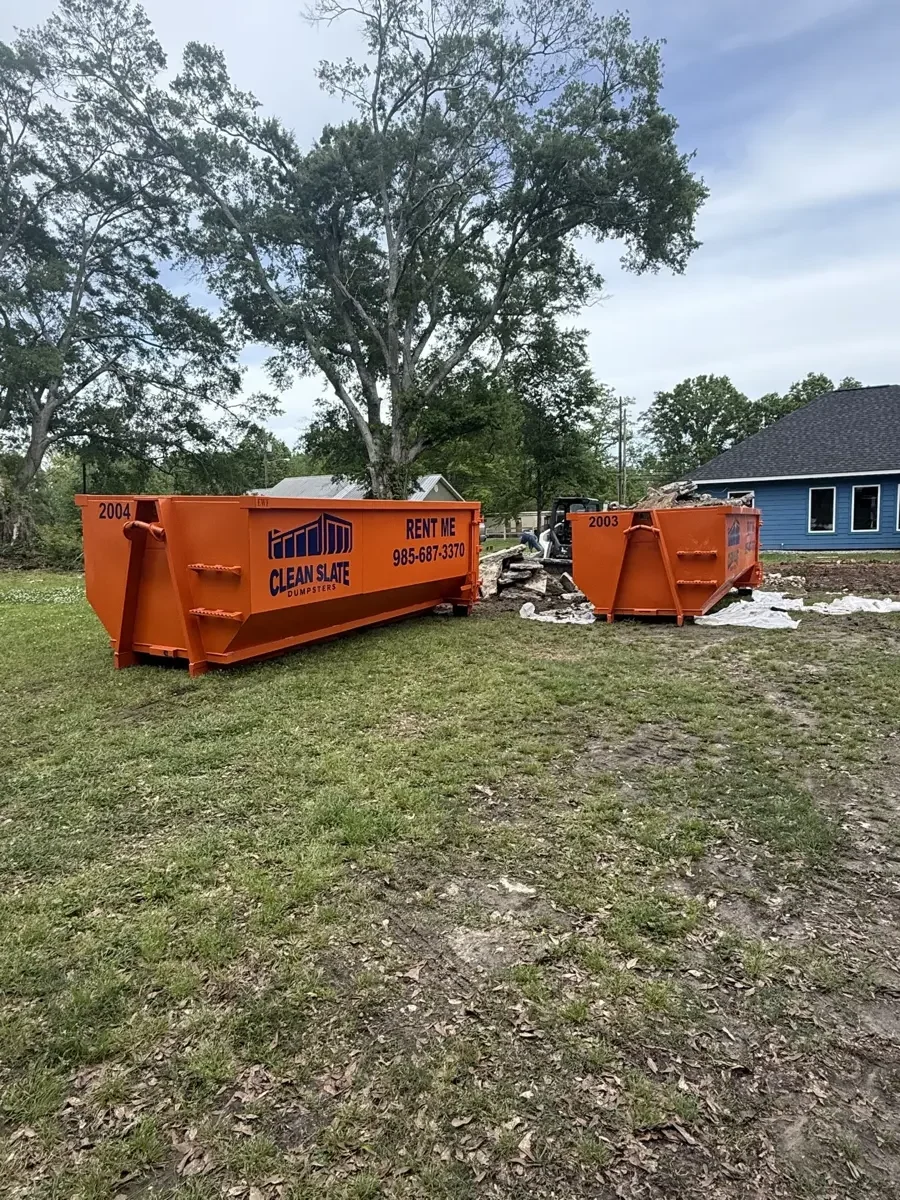
Sizing up is the other option. A 30-yard on a job that would fill two 15-yards means one delivery and one pickup instead of four trips. It also means fewer interruptions at the gate.
The rule of thumb is simple. If the debris comes in a steady stream over weeks, plan on swaps. If it comes in one big push, like a tear-out, size up and take it in one bin.
Rates are flat by size and by how long you keep the dumpster.
| Size | 1 day | 3 days | 7 days | 30 days |
|---|---|---|---|---|
| 15-yard | $299 | $349 | $399 | Not offered |
| 20-yard | $399 | $449 | $499 | $649 |
| 30-yard | $499 | $549 | $599 | $749 |
Extra days are $15 each, and that is where the 30-day rate earns its keep. Take a 20-yard on a job that runs a full month. A 7-day rental at $499 plus 23 extra days at $15 comes to $844. The 30-day rate is $649. On a 30-yard, the same math is $944 against $749.
So if a phase will run past about two weeks, book the 30-day rate up front. It gives the job a fixed cost and lets the crew work at its own pace. Our contractor dumpster rental cost breakdown goes deeper on the numbers, and the pricing plans page shows every size side by side.
Volume is easy to see. Weight is what shows up on the invoice.
Each size includes tonnage: 1 ton on the 15-yard, 2 tons on the 20-yard, and 4 tons on the 30-yard. Weight above that is $65 per ton. Our guide to dumpster weight limits and overage explains how to estimate a load before you book.
Heavy material needs its own plan:
Hazardous materials stay out of every roll-off. That means liquid paint, chemicals, solvents, motor oil, car batteries, propane tanks, and tires.
Placement decides how much time the crew spends walking debris.
The truck needs a clear path about 22 feet long and 10 feet wide to set the bin down, plus overhead clearance free of low branches and power lines. The 20-yard and 30-yard share a footprint of roughly 22 feet long and 8 feet wide. The 30-yard is taller, not longer.
Three things keep placement from becoming a problem:
A jobsite dumpster is only useful if it is there when the crew is.
Every booking is backed by our Next Day Guarantee. In Hammond, same-day delivery is often possible when available, because our yard is here and it is the shortest run we make. That gives a contractor scheduling certainty and removes the bottleneck of waiting on waste removal.
We own our equipment and run a local fleet. A national broker is a middleman and cannot always guarantee the equipment or the timing. With a local owner, you have a direct line to the people making the delivery.
For the full service details, see our construction dumpster rental page.
These come up on almost every job, usually the week before demo starts.
Use a 15-yard for smaller phases, a 20-yard for most remodel and build debris, and a 30-yard for high-volume jobs. The 30-yard is the preferred size for commercial construction and demolition work.
We remove the full dumpster and leave an empty one in its place. The crew keeps loading without stacking debris on the ground. Contractors can request a swap by text through Text Dispatch.
The 30-day rate is $649 for a 20-yard and $749 for a 30-yard. Each includes delivery, pickup, and standard disposal, with 2 tons included on the 20-yard and 4 tons on the 30-yard.
Yes, in its own bin. A concrete bin should hold only concrete, brick, or block, because mixing in other debris can mean higher fees at the recycling center. Tell us it is a concrete load when you book.
Same day when available, since our yard is in Hammond. Every booking is backed by our Next Day Guarantee, so you are not waiting past tomorrow.
Running a job in Hammond? Plan the bin with the phases.
Tell us the scope and the schedule, and we will line up the size, the swaps, and the rate that fits.
