
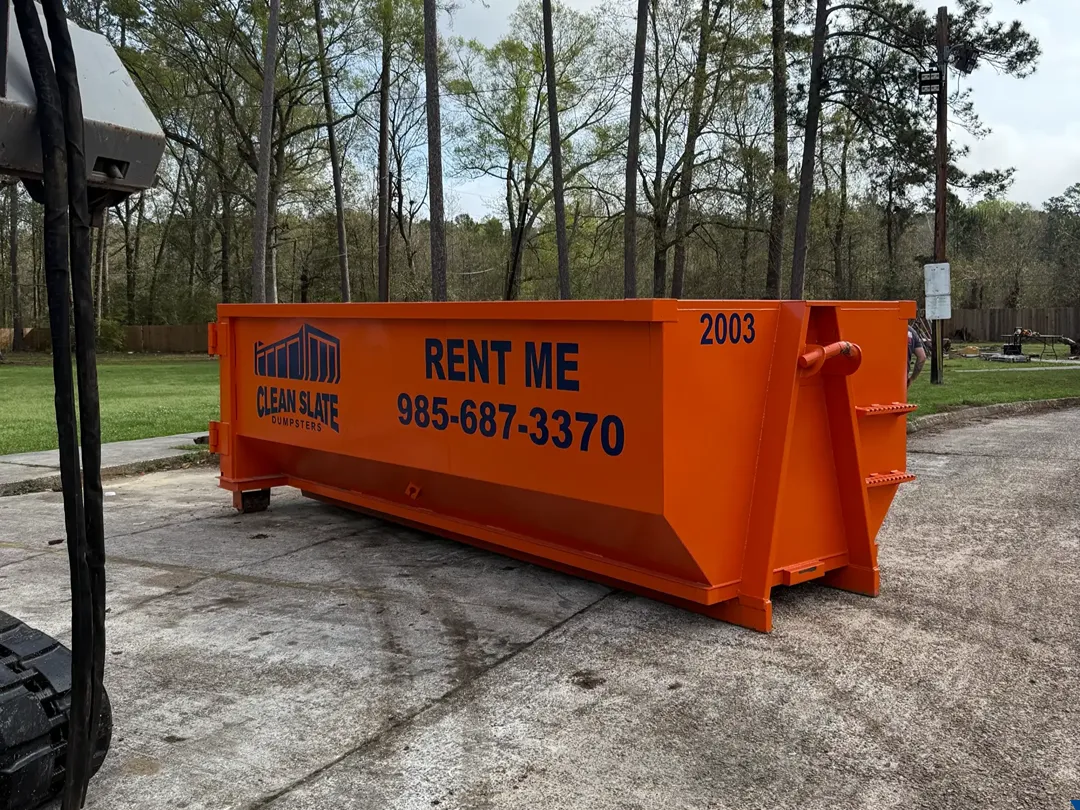
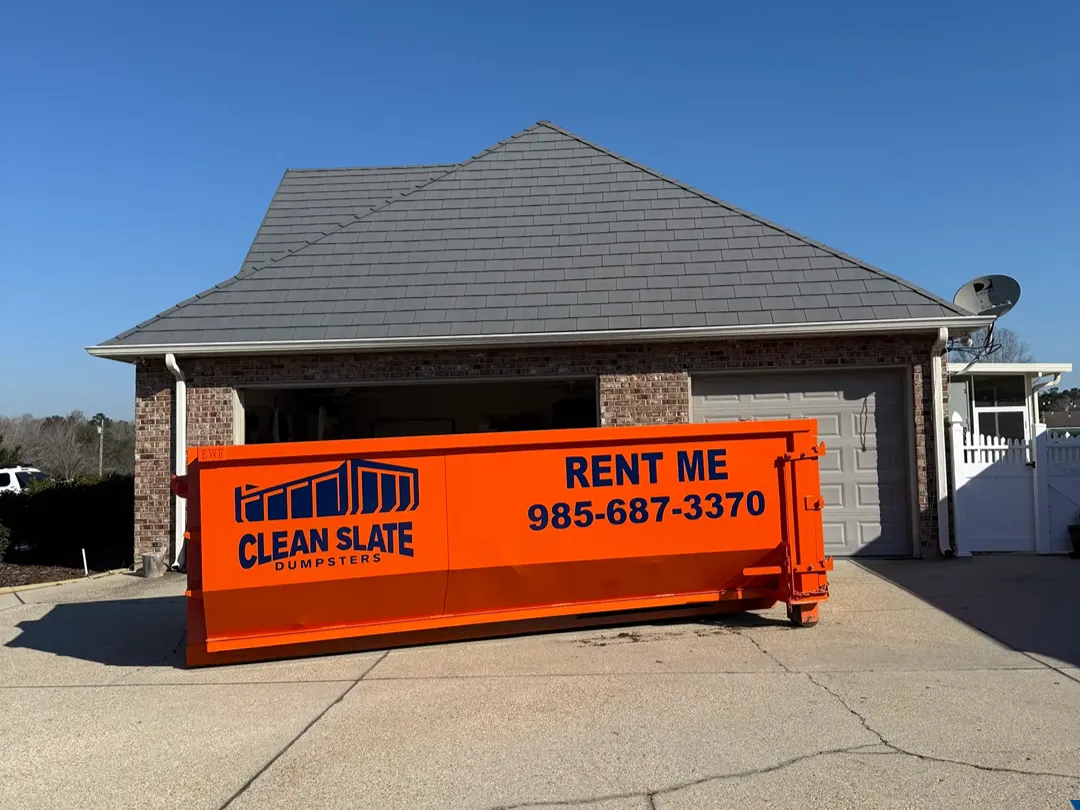
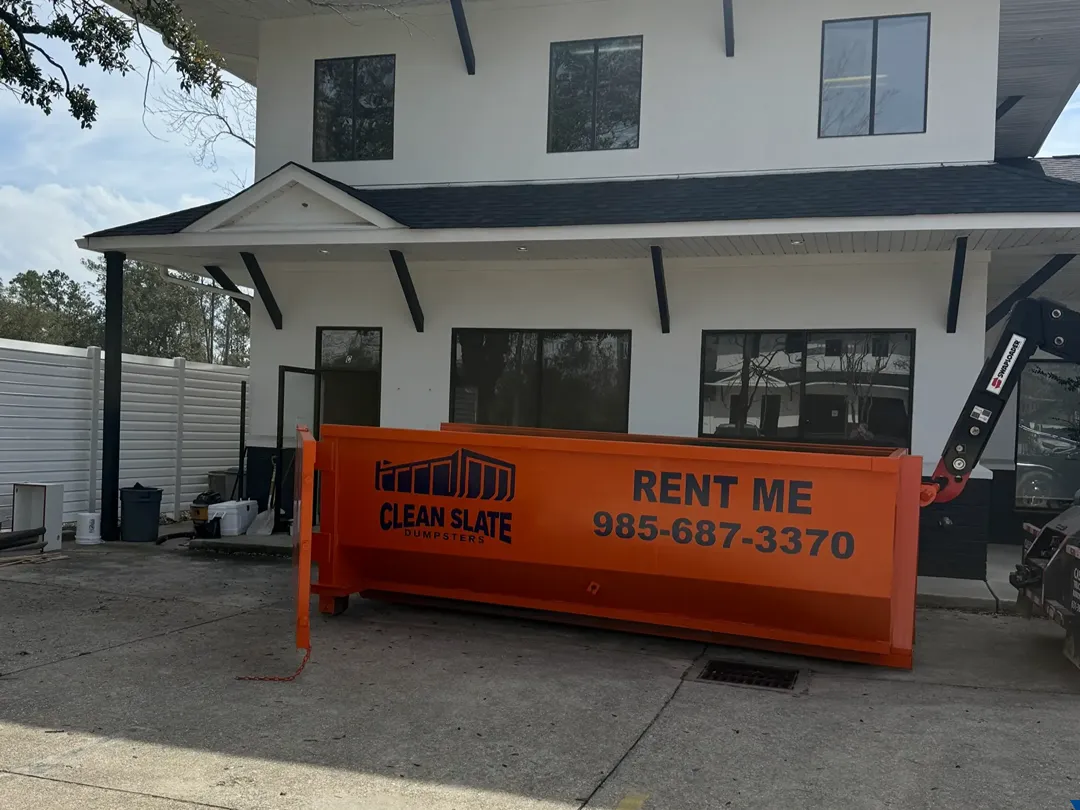
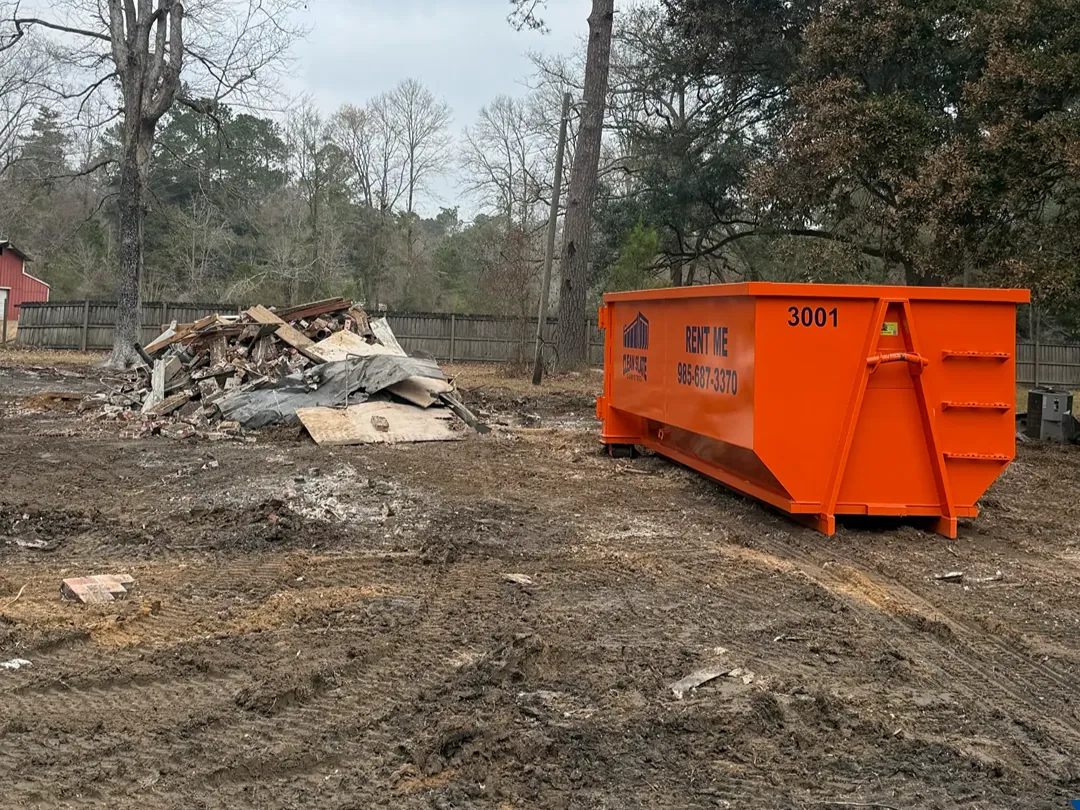
Quick Answer: To prepare your driveway for a roll-off dumpster, protect the surface with boards or plywood under the wheels and rear rollers, clear a straight approach roughly 60 feet long and 10 to 11 feet wide with about 25 feet of overhead clearance, move vehicles and anything else out of the path, and mark the exact spot you want the dumpster placed. That short checklist prevents almost every delivery problem, from a scratched driveway to a truck that cannot get in.
Will a dumpster wreck your driveway? It is the most common worry we hear from Hammond homeowners, and the honest answer is that with a few minutes of prep, almost never. A loaded roll-off weighs several tons, so the concern is fair. The good news is that the same short checklist protects your surface, keeps delivery fast, and takes the guesswork out of where the dumpster ends up.
Clean Slate Dumpsters places protective boards under every drop as standard, so surface protection is built into how we deliver. Your part is clearing the way and picking the spot. This guide walks through both, so the truck rolls in, sets the dumpster exactly where you want it, and rolls out without leaving a mark.
Ready to book a drop in Hammond, Ponchatoula, or the surrounding Tangipahoa area? Book your dumpster online, or call 985-687-3370.
Surface protection is the heart of driveway prep. It is the step that turns a several-ton delivery into a non-event.
The method is simple: place boards or plywood under the dumpster’s wheels and rear rollers. Hometown Dumpster Rental explains why in its guide to preventing driveway damage, noting that plywood beneath the steel feet or wheels cushions the container and prevents scratches and cracks. It works by spreading the load across a wider area instead of concentrating it on the small contact points of the wheels and rollers.
This is where a local operator earns its keep. Clean Slate brings protective boards to every delivery, so the surface is covered whether you put anything down or not. If you want extra insurance on an older or decorative driveway, laying your own plywood on top is never a bad idea. Our brand is built on the small stuff that other haulers skip, the same reliability we cover in our home cleanout dumpster rental guide for Hammond.
Not every surface reacts the same way to a heavy container, so it helps to know what yours is prone to. This shapes how much protection is worth adding.
Concrete is hard but brittle. Under a concentrated point load, it can crack, which is exactly what boards under the wheels are meant to prevent, as Hometown Dumpster Rental notes in the guide above. Asphalt has the opposite problem. It softens in heat, and a heavy load on a hot day can leave an impression. OMNI Engineering, writing about asphalt maintenance, observes in its summer driveway guidance that when heat softens the surface, concentrated pressure can leave deep and permanent impressions. In a Louisiana summer, that matters.
Grass and soft ground are the surfaces to avoid. A several-ton dumpster will sink and rut into a lawn, and the damage is worse when the ground is wet. Choose a paved, level spot whenever you can, and skip any noticeable slope. If a paved surface is not an option, talk to us first so we can plan the placement.
| Surface | Main risk | Best move |
|---|---|---|
| Concrete | Cracks under a concentrated point load | Boards under wheels and rollers |
| Asphalt | Softens and dents in summer heat | Boards, and avoid the hottest part of the day |
| Grass or soil | Sinks and ruts, worse when wet | Avoid it; choose a paved, level spot |
| Sloped ground | Shifting and uneven load | Pick a level surface instead |
Knowing your surface turns a guess into a plan, and it is the difference between a smooth drop and a repair bill.
The dumpster is only half the delivery. The truck has to get in, and it needs more room than most people expect.
Give the driver a straight, clear approach. Budget Dumpster recommends in its delivery preparation tips a drop zone about 60 feet long and 10.5 feet wide, with 25 to 30 feet of overhead clearance, and a path that is clear, straight, and free of hanging wires or tree branches. Dumpsters.com echoes the same footprint in its delivery guidance, noting a typical residential roll-off is about 7.5 feet wide and 14 to 22 feet long, so the extra room is for maneuvering, not just the box itself.
Overhead clearance is the one people forget. The truck raises the bed hydraulically to slide the dumpster off, so low branches and utility lines over the drop spot are a real obstacle. Walk the approach and look up as well as around before delivery day.
Once you know the path, clear it. This is the fastest and cheapest part of prep, and skipping it is the most common cause of a failed delivery.
Move vehicles out of the driveway and, if the driver needs to back in from the street, off the street in front of the house too. Both Dumpsters.com and Budget Dumpster stress keeping the approach clear of cars, trash bins, tools, and low-hanging branches, and leaving any gates open. A basketball hoop, a trailer, or a parked boat in the wrong spot can turn an easy drop into a reschedule.
Keep the area accessible for the whole delivery window, not just the moment you expect the truck. Delivery itself is quick, often under ten minutes once the driver is in position, but the truck cannot work around a blocked path.
Here is the step that saves the most frustration: tell the driver exactly where you want the dumpster. Otherwise you are trusting a guess.
Mark the placement spot before the truck arrives. Dumpsters.com suggests a cone or chalk, and Budget Dumpster recommends colored tape, a couple of 2×8 boards, or cones to show the preferred location. It takes thirty seconds and it means the dumpster ends up where it is useful, close to the work, out of the way of the garage, and not blocking a gate or a car you still need.
Think about how you will use it, too. Leave room to open the rear swing door if you plan to walk debris in rather than throw it over the side. A little planning here makes the whole rental easier. If you are still deciding which size fits your project and your driveway, our dumpster pricing and sizes page lays out the options.
For most Hammond homeowners, a driveway drop needs no permit at all. It is worth a quick check anyway.
Placing a dumpster on your own private driveway generally does not require a permit. Dumpsters.com notes in its permit guidance that you usually do not need one when the dumpster stays on private property. A public right-of-way such as a street or sidewalk typically does require a permit, and local rules vary. If you rent or live in a deed-restricted neighborhood, a quick look at your HOA rules is smart.
If the only spot available is the street, confirm the local requirements first. In this area that means checking with the City of Hammond or the Tangipahoa Parish permit office before delivery. When in doubt, just ask us. We deliver here every week and can tell you what a street placement involves.
These are the questions Hammond and Tangipahoa homeowners ask most before their first roll-off arrives. The short version is that a few minutes of prep protects your driveway and keeps delivery smooth. The answers below cover the details.
It rarely does when the surface is protected. A loaded roll-off weighs several tons, so the weight is real, but boards or plywood under the wheels and rollers spread that load and prevent scratches and cracks. Clean Slate places protective boards under every drop, so surface protection is built into the delivery.
Plan for a straight approach about 60 feet long and 10 to 11 feet wide, with roughly 25 to 30 feet of overhead clearance. The truck raises its bed to slide the dumpster off, so the path needs to be clear of low branches and wires overhead, not just obstacles at ground level.
It is best avoided. A several-ton dumpster sinks and ruts into a lawn, and the damage is worse when the ground is wet. A paved, level surface like a driveway is the right choice. If you have no paved option, contact us first so we can plan the placement.
Usually not. A dumpster kept on your private driveway generally does not require a permit. A permit is typically needed only for placement in a public right-of-way such as the street or sidewalk. If you are in an HOA neighborhood, check its rules, and confirm street placement with the City of Hammond or Tangipahoa Parish first.
Mark the exact spot before delivery with a cone, chalk, tape, or a board. Marking the location takes the guesswork out of it for the driver and means the dumpster lands close to your work and clear of gates, cars, and the garage. Leave room to open the rear door if you plan to walk debris in.
The drop itself is quick, often under ten minutes once the driver is in position. Most of the time is the truck maneuvering into place, which is why a clear, straight path matters so much. Keep the area accessible for the whole delivery window, not just the moment you expect the truck.
On time. No surprises. And boards under every drop.
Clean Slate Dumpsters delivers roll-off dumpsters across Hammond, Ponchatoula, and Tangipahoa Parish with protective boards under every placement and clear pricing up front. Prep your driveway with the checklist above, and we handle the rest.