
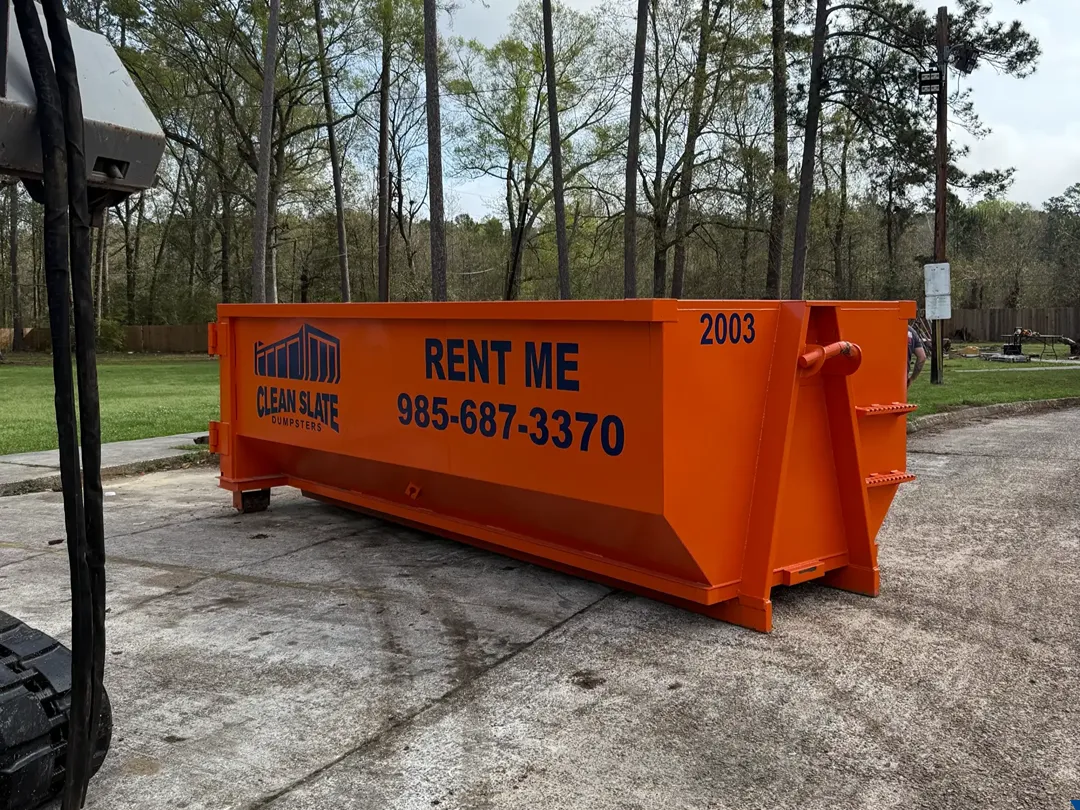
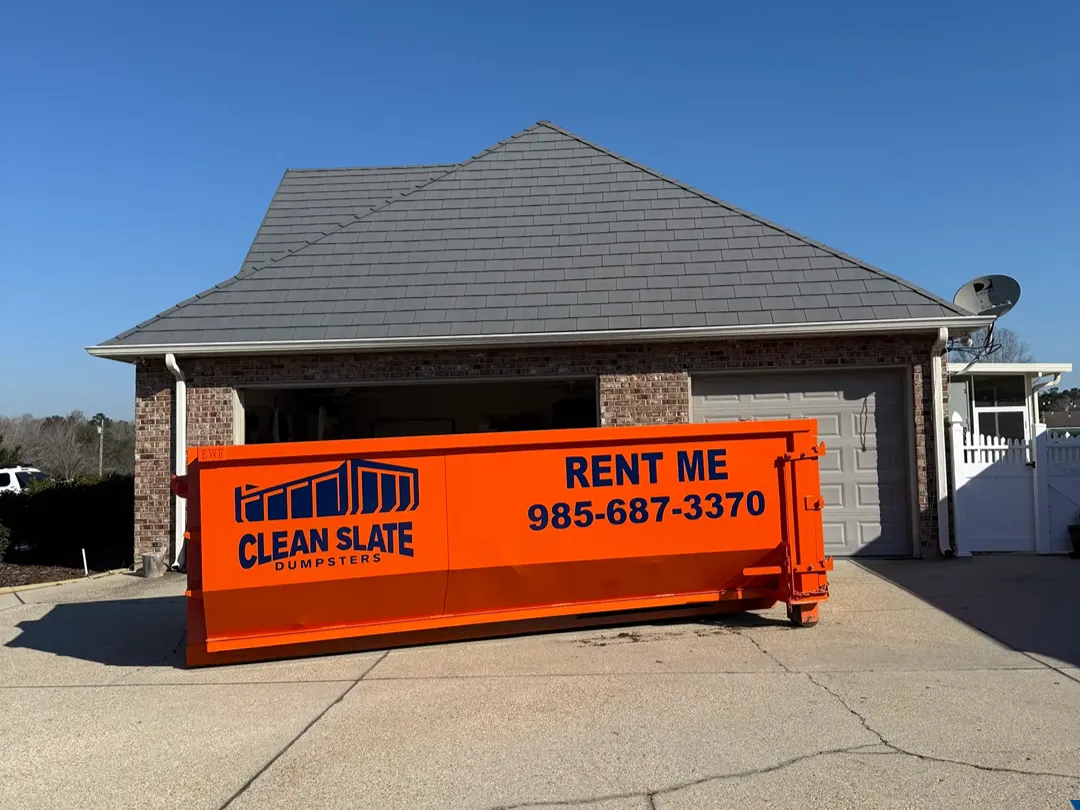
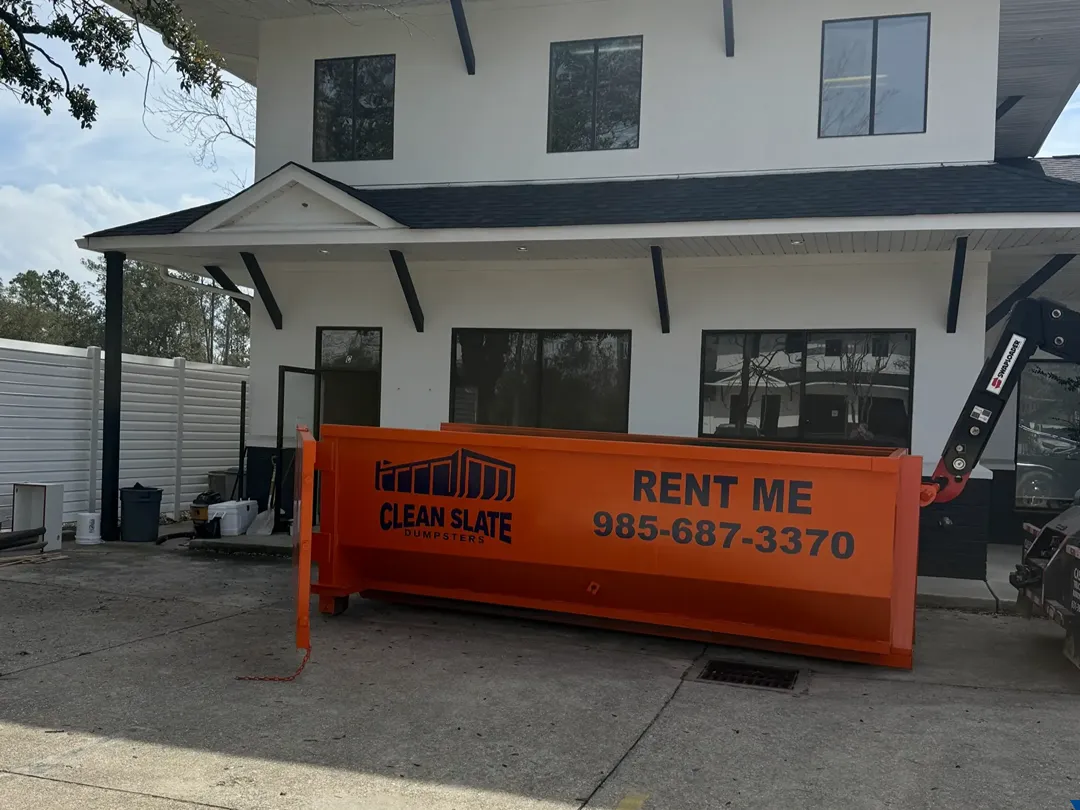
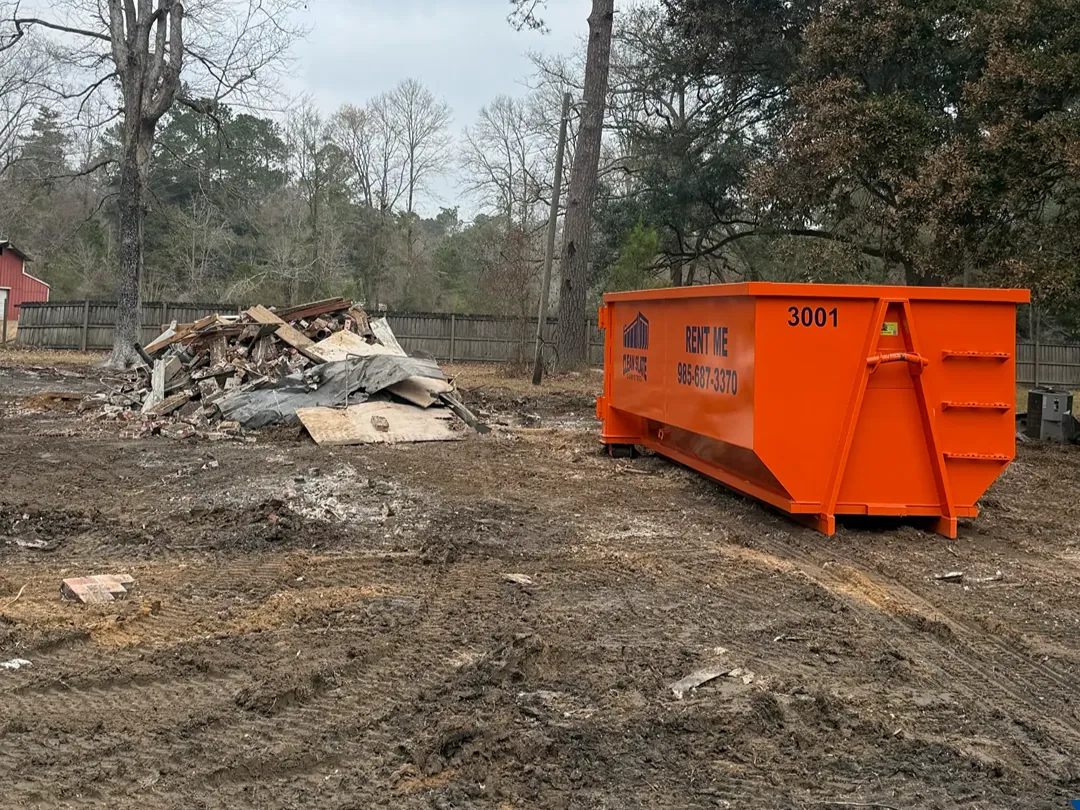
Picking the wrong dumpster size turns a one-week project into a three-week one. Pick too small, and you’re paying for a second delivery to finish what should have been one trip. Pick too big, and a chunk of the rental fee covers air. The right size on the first call is the difference between a project that closes on schedule and one that drags into another weekend.
For homeowners and contractors in Hammond, Ponchatoula, and across Tangipahoa Parish, the answer almost always comes down to three sizes — 15, 20, or 30 yards. This guide walks through which one fits which job, the real tonnage math, and the local quirks that change the answer.
The short answer: For most Hammond homeowner projects — garage cleanouts, kitchen remodels, mixed cleanout debris — start with a 20-yard dumpster ($399, 2 tons included). For whole-house cleanouts, full remodels, and contractor jobsites, 30-yard ($499, 4 tons). For roofing tear-offs, single-room work, and tight driveways, 15-yard ($299, 1 ton). The 20-yard is the most-rented residential size in the country for a reason — it has enough headroom to absorb “I’m not sure what I’ll generate.”
In Tangipahoa Parish, 70.3% of households own their home, and the median home value sits at $212,900 with 4% annual growth, per the 2024 American Community Survey data via DataUSA. That’s a steady stream of remodels, cleanouts, and storm cleanup — and a steady stream of “I should have ordered the bigger one” moments.
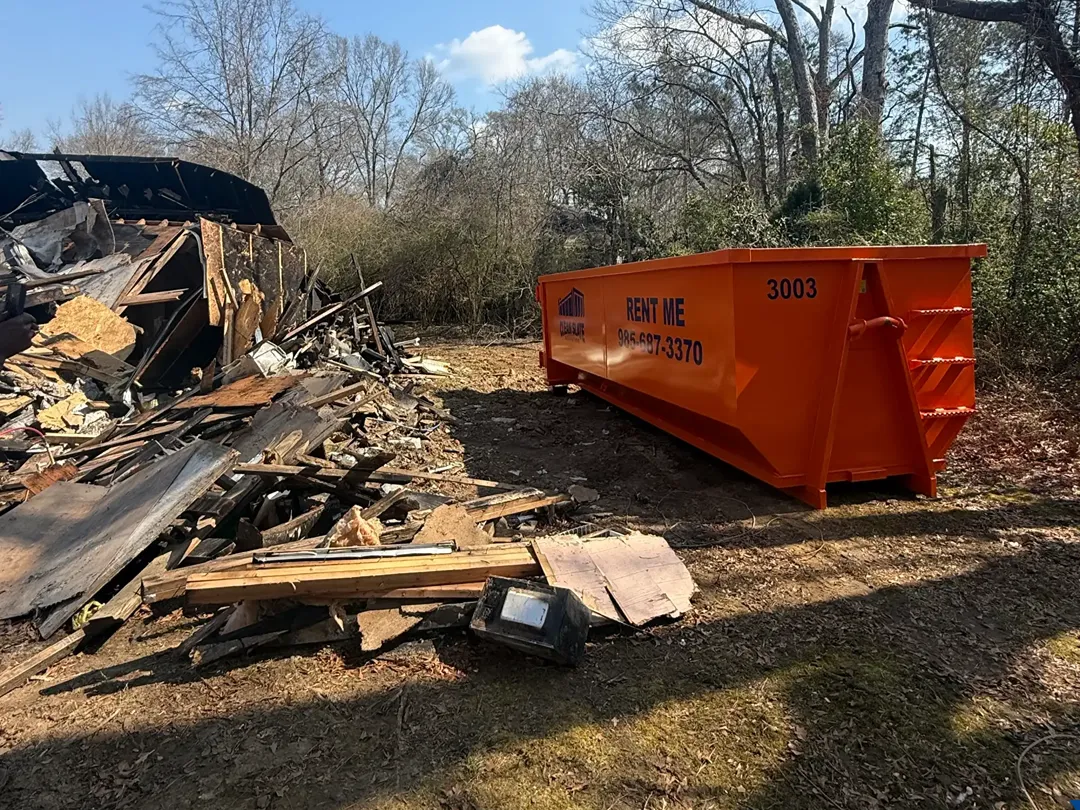
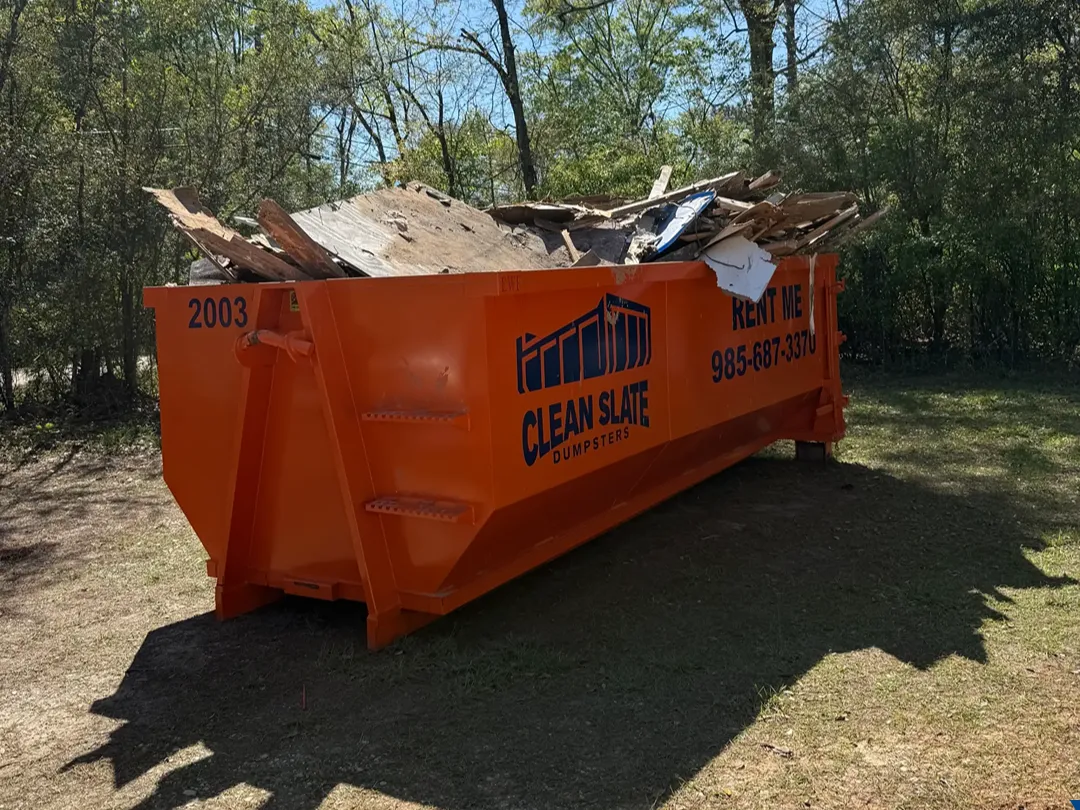
Picking too small triggers a chain reaction. A second delivery means a second delivery fee. It also means the debris sits in the yard or driveway for an extra two or three days, which is fine for an empty lot but rough on a neighbor or an HOA. Picking too big means the rental fee covers space the project never used.
The other gotcha is the weight limit. Every roll-off has a tonnage included with the base price. Drywall, shingles, and concrete add up faster than people expect. Hit the cap, and the overage fee starts. Hammond’s mix of older single-family homes and newer construction means projects span both sides of the size question — a 1950s kitchen tear-out and a 2020 garage cleanout don’t generate the same debris pile.
The framework below is built around how Clean Slate Dumpsters actually delivers in Hammond, Ponchatoula, and the surrounding Tangipahoa towns — not generic broker math.
A “yard” in dumpster talk is a cubic yard — a cube three feet on each side, holding roughly 27 cubic feet of material. The number on a dumpster (15-yard, 20-yard, 30-yard) is the cubic-yard capacity to the fill line, not the truck size or the footprint.
The most useful mental model is the pickup truck. Most people know roughly what one full pickup load of junk looks like, so counting loads makes the sizes easy to picture.
So Clean Slate’s three sizes look like this in pickup terms:
What this doesn’t account for is weight. Volume is the easy part. A 30-yard dumpster filled with cardboard and pillows weighs almost nothing; the same 30-yard filled with concrete or wet drywall will hit the tonnage cap long before the fill line. That tension — volume versus weight — is the whole sizing problem in two words, and Section 5 below walks through it for roofing specifically.
Match the project to a size first. Refine for weight second.
For most Hammond and Ponchatoula homeowner work, start at the 20-yard. The 20-yard is the most-rented residential size in the country, and it’s the most-rented size at Clean Slate Dumpsters too — because “I’m not sure exactly how much I’ll generate” lands here without an overage. For roofing tear-offs and one-room work, start at 15-yard. For whole-house cleanouts, full remodels, and active contractor jobs, start at 30-yard.
The table below is the quick lookup.
| Project Type | Recommended Size | Typical Weight Band |
|---|---|---|
| Garage cleanout | 15- or 20-yard | Light to medium |
| Single-room remodel | 15-yard | Medium |
| Kitchen remodel | 20-yard | Medium to heavy |
| Bathroom remodel | 15- or 20-yard | Medium |
| Whole-house cleanout | 30-yard | Medium |
| Roofing tear-off (single layer) | 15- or 20-yard | Heavy (weight-limited) |
| Storm and yard debris | 15- or 20-yard | Light |
| Shed or deck demolition | 20- or 30-yard | Medium to heavy |
| Small structure tear-down | 30-yard | Heavy |
| Concrete removal | 15-yard | Very heavy (weight-limited) |
| Scrap and metal cleanout | 15-yard | Heavy |

The pattern that catches people: roofing and concrete are weight-bound, not volume-bound. The dumpster looks half-empty when the scale says it’s full. That’s why the 15-yard handles a single-layer asphalt tear-off well even though a 20-yard would seem like more headroom — the 1-ton cap is the constraint, not the cubic feet.
Three sizes, three personality types. The right pick usually announces itself once the project is on paper.
Best for: roofing tear-offs (single layer), single-room remodels, small yard debris, garage cleanouts on tight driveways.
The 15-yard ($299, 1 ton included, $65 per additional ton, $15 per extra day) is the call when access is tight or the debris is heavy. The footprint fits older Hammond and Ponchatoula driveways that newer 30-yards can’t safely approach. It’s also the right answer for jobs where weight matters more than volume — concrete, scrap metal, single-layer roofing — because the 1-ton cap forces the conversation about tonnage early, before the project is half-finished.
The catch: drywall and mixed debris fill it faster than people expect, so a kitchen remodel that “feels small” can outgrow the 15 in a single weekend. Walk through the project in your head before locking in. The 15-, 20-, and 30-yard pricing breakdown shows ton inclusion and extra-day rates side by side, and dimensions are on the 15-yard roll-off dumpster page.
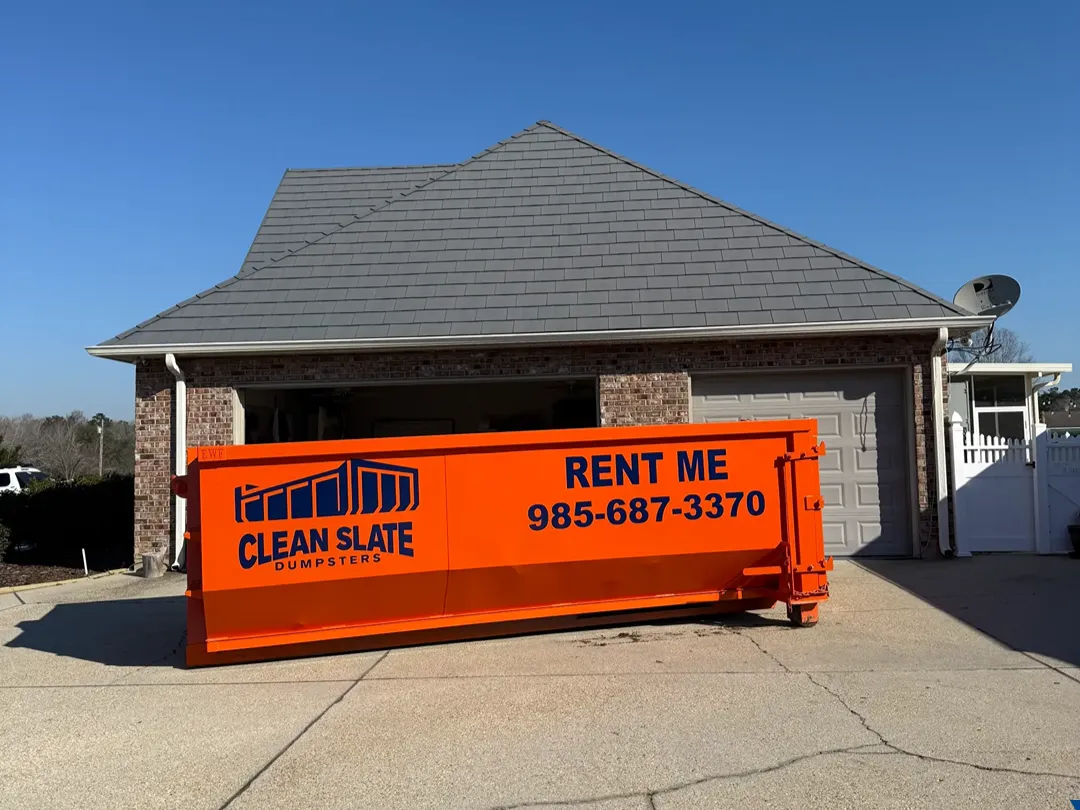
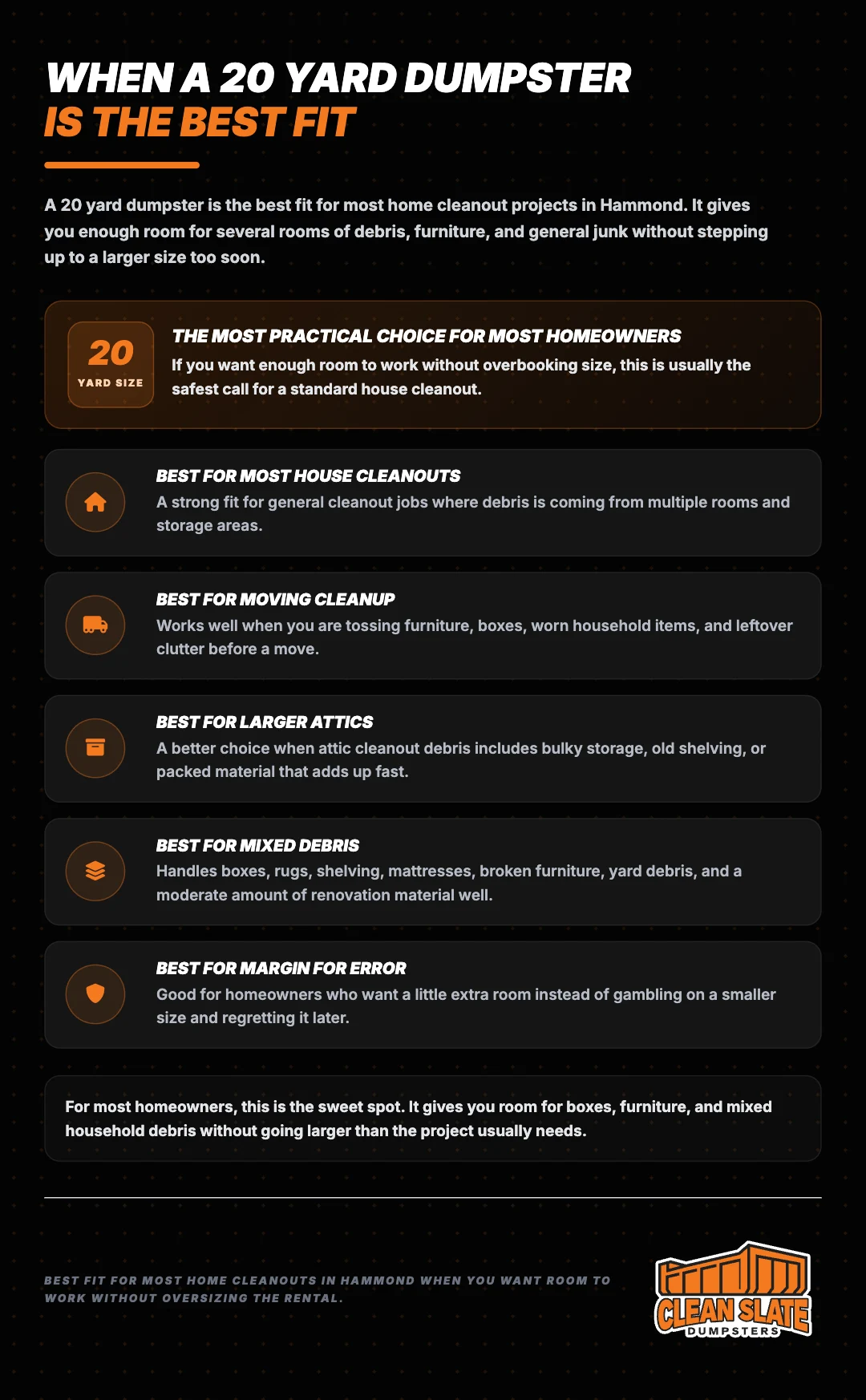
Best for: most home projects, kitchen and bath remodels, mixed-debris cleanouts, light roofing, weekend declutter projects.
The 20-yard ($399, 2 tons included, $65 per additional ton, $15 per extra day) is the all-around answer. National haulers report it is the most-rented residential roll-off size in the United States, and the reason is simple: it gives a homeowner enough volume and enough included tonnage that “I’m not totally sure what I’ll generate” usually finishes inside the included weight. Kitchen remodel? 20-yard. Garage cleanout that might also include some old yard equipment? 20-yard. Bathroom tear-out plus an attic? 20-yard.
The 20 fits standard suburban Hammond driveways without much fuss, and the 2-ton allowance covers mixed-debris loads up to roughly 4,000 pounds — which is most non-roofing, non-concrete projects. See the 20-yard roll-off dumpster page for placement details, or check Clean Slate’s home cleanout dumpster rental in Hammond for cleanout-specific guidance.
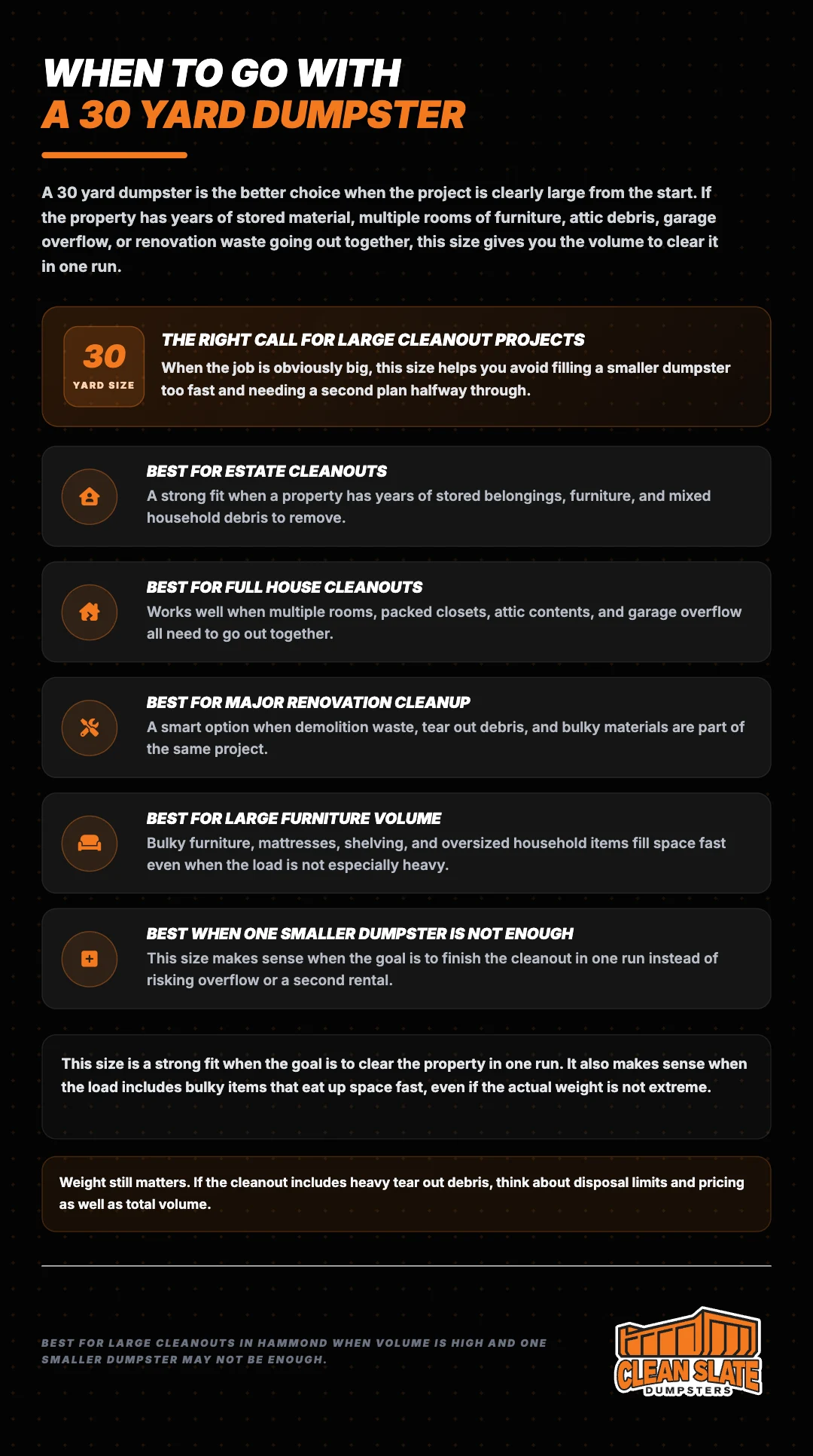
Best for: whole-house cleanouts, full remodels, contractor cleanup, multi-day jobsites, demolition with mixed debris.
The 30-yard ($499, 4 tons included, $65 per additional ton, $15 per extra day) is built for volume and longer rental cycles. Four tons of included weight is enough to absorb a heavier remodel without crossing into overage territory, and the cubic feet give a multi-day contractor job room to breathe between dump runs. Whole-house cleanouts, full kitchen-plus-bath remodels, shed demos, and steady contractor cleanup all sit comfortably here.
The trade-off is footprint. The 30 needs a wider driveway and clearer approach, so an older Ponchatoula bungalow with a single-car drive may not work. Section 8 below covers the access question in more detail. See the 30-yard roll-off dumpster page for dimensions, or the contractor dumpster rental in Hammond for repeat-job pricing and account-setup details.
A lot of national broker sites push the 10-yard as the default for roofing tear-offs. There’s a reason for that, and there’s a reason Clean Slate doesn’t carry one. Both reasons come down to weight.
A roofing square is 100 square feet of finished roof. Per the NRCA-cited InterNACHI shingle weight reference, three-tab asphalt shingles weigh 200 to 250 pounds per square, while architectural asphalt shingles run 250 to 400 pounds per square. Industry roofing sizing guides put roofing debris at roughly 0.5 cubic yards per square.
Run the numbers on a typical 30-square Hammond house with architectural shingles:
A 10-yard’s 1-ton cap can’t carry that. Even a 15-yard at 1 ton included would overage by close to four tons — at $65 per ton, that’s about $250 in overage before counting any roofing felt, nails, or sheathing. Volume isn’t the limit. Weight is.
That’s why Clean Slate built roofing-specific flat-rate pricing by the square rather than forcing customers into a mismatched size. For a standard single-layer tear-off, the per-square pricing is usually the cleaner answer; for messier roofs with two or three layers, structural decking work, or mixed contractor debris, the 20- or 30-yard with an honest tonnage conversation up front works better.
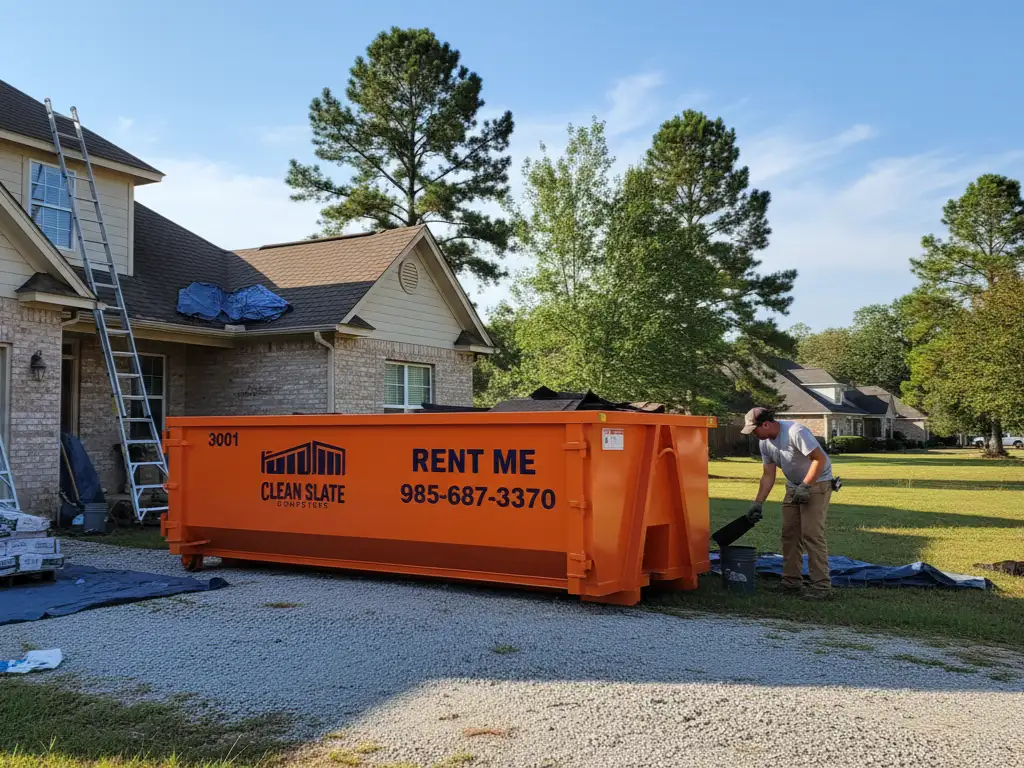
The full breakdown on roofing dumpster rental in Hammond — including the flat-rate-by-squares pricing — lives on the roofing service page. Call before you book if you’re not sure which side of the weight question your job falls on.
The 40-yard is the other size people ask about. It’s not in Clean Slate’s lineup, and that’s a deliberate call.
A 40-yard roll-off is built for industrial demolition and large commercial cleanup. It is not a size we rent. Most contractor jobs in Tangipahoa Parish fall short of the threshold where a 40 actually beats two 30-yard swaps, and the 30-yard covers the large residential and contractor jobs we see here.
The honest math for residential and light commercial work: two 30-yard rentals usually win on access, on driveway protection, and on total cost. Clean Slate’s “Dump and Return” option resets the rental clock without forcing a second base fee on the second container, which means a long project can roll through multiple 30-yard cycles without paying for an oversized 40 it can’t safely fit.
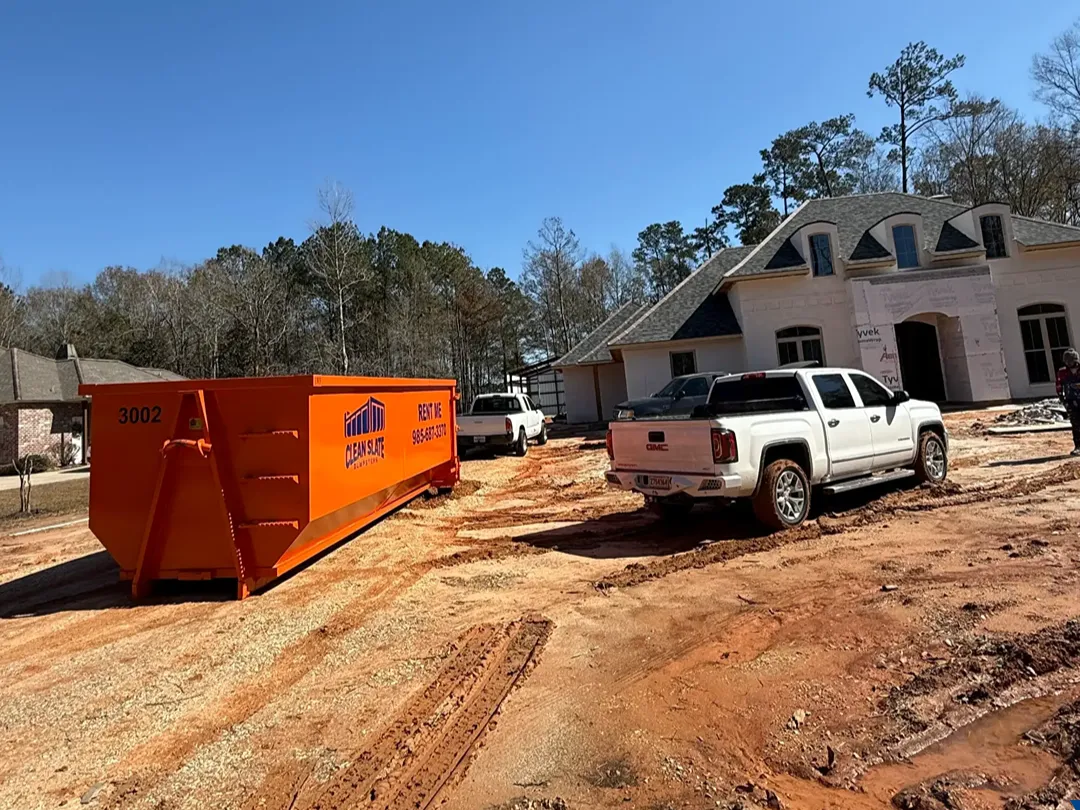
For genuinely industrial-scale demo jobs, a broker with a 40-yard fleet is the right vendor. For everything else local — including most contractor work in Hammond and Ponchatoula — the 30-yard plus Dump and Return is the cleaner setup. Demolition dumpster rental in Hammond walks through demo-specific pricing in more detail.
The tonnage cap is where sizing decisions become pricing decisions.
Clean Slate’s overage fee is $65 per ton above the included weight — squarely mid-range against the $40 to $100 per ton industry band tracked in national 2026 dumpster rental cost guides. The included tonnage scales with the size: 1 ton in the 15-yard, 2 tons in the 20-yard, 4 tons in the 30-yard. Hit the cap and the meter starts; stay under it and the base price is the price.
The way to stay under is to know what your debris actually weighs before you book.
Rough weight density by material, by the cubic yard:
A 20-yard filled with a kitchen remodel’s mixed debris — drywall, lumber, fixtures, packaging — usually lands around 3,000 to 4,000 pounds, which fits inside the 2-ton allowance. The same 20-yard filled with concrete? Five tons of overage, before the project hits the fill line.
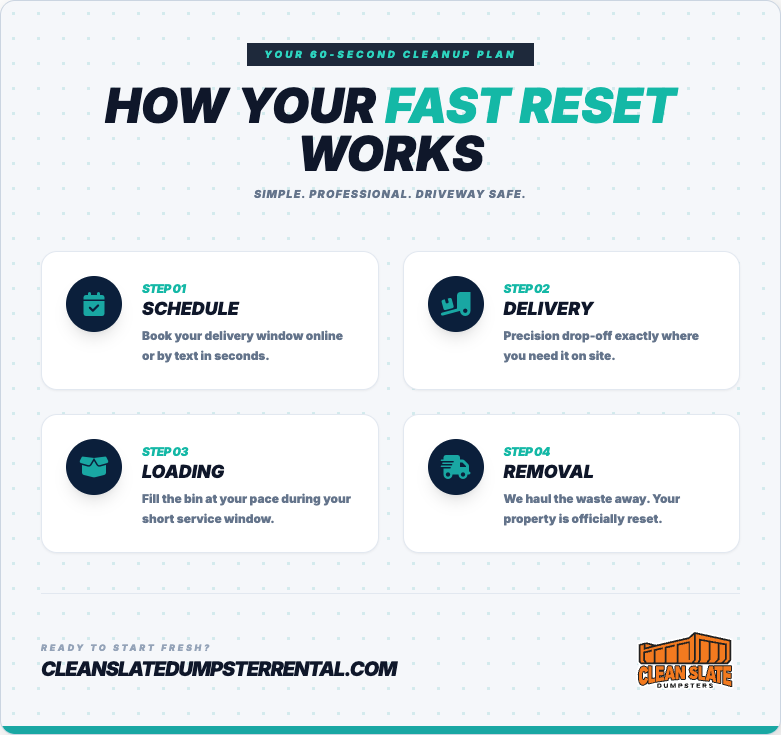
The other lever is Dump and Return. For projects running long, the option to have the dumpster hauled, emptied, and brought back keeps a single container working through multiple cycles without restarting the booking process. The rental day clock resets; the included tonnage resets; the work keeps moving. Full Dump-and-Return rates sit on the Clean Slate Dumpsters pricing breakdown.
Three local factors that change the sizing answer for Tangipahoa Parish projects:
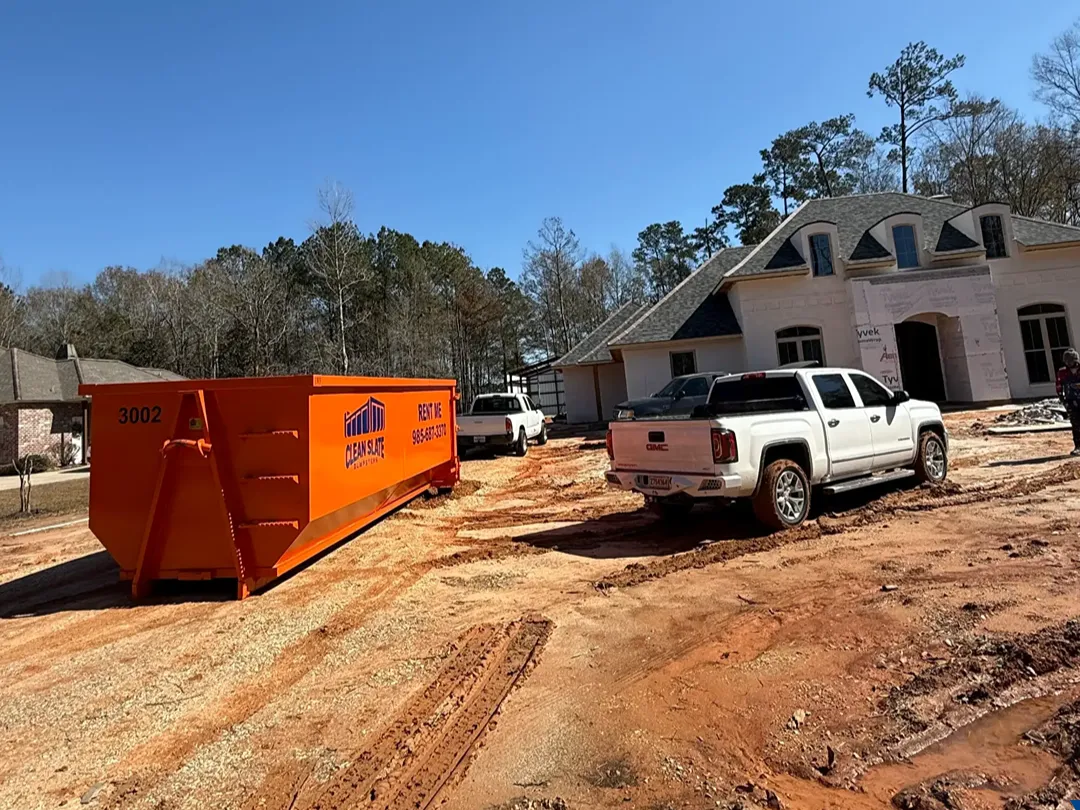
Driveway access. Older neighborhoods in Hammond and Ponchatoula were built when single-car driveways were the norm. The delivery truck needs a clear path about 22 feet long and 10 feet wide, plus overhead clearance free of low branches and power lines, to set the container down and pick it up cleanly. If the drive is narrow, has a tight angle, or sits behind a low-clearance carport, the 15-yard is the safer book because it has the most compact footprint, even if the volume case argues otherwise. Driveway protection boards go under the container at delivery, so surface damage isn’t the worry; it’s truck access.
Hurricane season. From June 1 through November 30, storm-debris demand can swing booking lead times by days. After a named storm makes landfall anywhere in southeast Louisiana, the trucks book up fast. The sizing answer doesn’t change, but the availability answer does. Clean Slate delivers same day on most bookings and guarantees next day, so even in storm weeks when other yards book up you have a firm date to plan around.
Permits. A dumpster placed entirely on private property — driveway, yard, parking lot — does not require a City of Hammond permit. Placement on a public street, sidewalk, or right-of-way does require coordination with the city. If the project doesn’t have a usable driveway and the dumpster needs to sit on the street, call the city’s permitting office before booking the delivery.
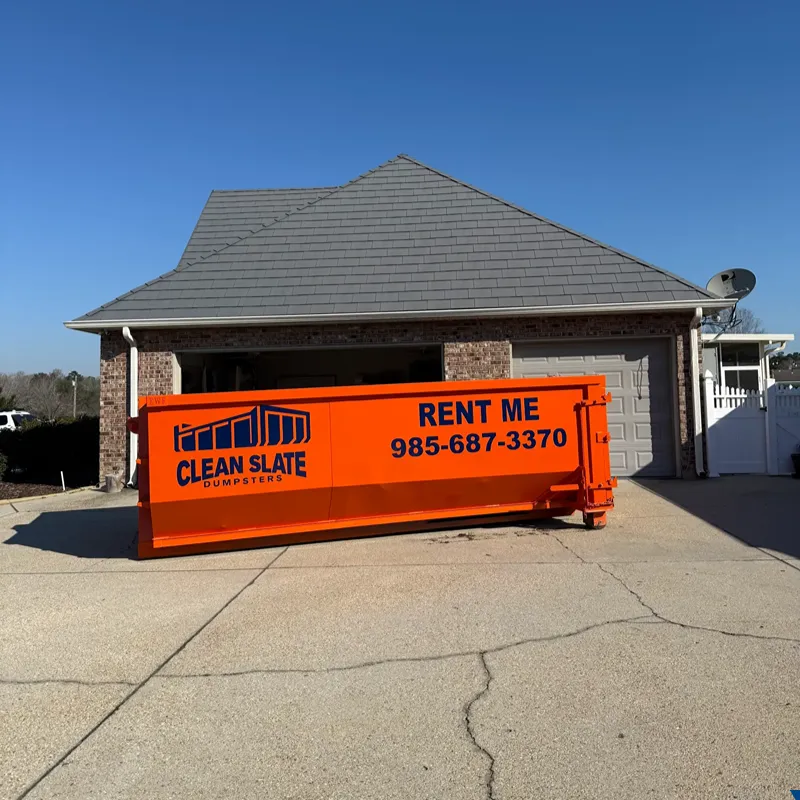
Not sure which size fits? Call 985-687-3370 and walk through the project. Sizing recommendations are no-charge, and delivery is usually same day, guaranteed next day.
In cubic yards. One cubic yard is a 3-foot cube — roughly 27 cubic feet of capacity to the fill line. Clean Slate’s 15-yard holds about four to six full-size pickup truck loads of debris; the 20-yard holds about six; the 30-yard holds about nine.
For a standard single-layer asphalt tear-off on a typical 25- to 35-square Hammond-area home, a 15-yard usually works on volume — but architectural shingles can run up to 400 pounds per square, which pushes a 30-square house past 5 tons of debris. Clean Slate’s roofing-specific flat-rate pricing by the square is the cleaner option for most single-layer tear-offs; call 985-687-3370 for a quote.
Loads can’t be hauled above the fill line — that’s a safety rule, not a Clean Slate policy. Weight over the included tonnage is billed at $65 per ton, which sits in the mid-range of the $40 to $100 per ton national industry band tracked in national 2026 dumpster rental cost guides. The Dump-and-Return option is the move for projects that need more volume without restarting the rental.
About six full-size pickup truck loads. By the same estimate, a 15-yard holds about four to six loads and a 30-yard holds about nine. Weight, not volume, is usually the limiting factor for heavier debris.
Driveway placement on private property does not require a City of Hammond permit. Placement on a public street, sidewalk, or right-of-way does require coordination with the city — call the permitting office before booking the delivery. Clean Slate’s drivers can advise on placement, but the permit responsibility sits with the property owner.
Call 985-687-3370 and walk through the project. Clean Slate offers free sizing recommendations and same-day delivery on most homeowner bookings, guaranteed next day. The conversation usually takes five minutes, and it almost always saves the cost of a second delivery later. For more on placement, weight, and permits, see all dumpster rental FAQs.
Ready to book the right size?
For most Hammond homeowner projects, the 20-yard ($399, 2 tons) is the safe pick. For roofing, single-room jobs, or tight driveways, the 15-yard ($299, 1 ton). For whole-house cleanouts and contractor sites, the 30-yard ($499, 4 tons).
Not sure which one fits? Call 985-687-3370 for a free sizing recommendation. Usually same day. Guaranteed next day.
Picking the right size is the single decision that determines whether a project closes on schedule or runs into a second weekend. The 20-yard is the safe default for most Hammond homeowner work. The 15-yard wins on tight access and weight-heavy jobs. The 30-yard fits whole-house and contractor projects. When the call is close, the Hammond dumpster rental pricing page and a five-minute phone conversation usually settle it — without the cost of a second haul.