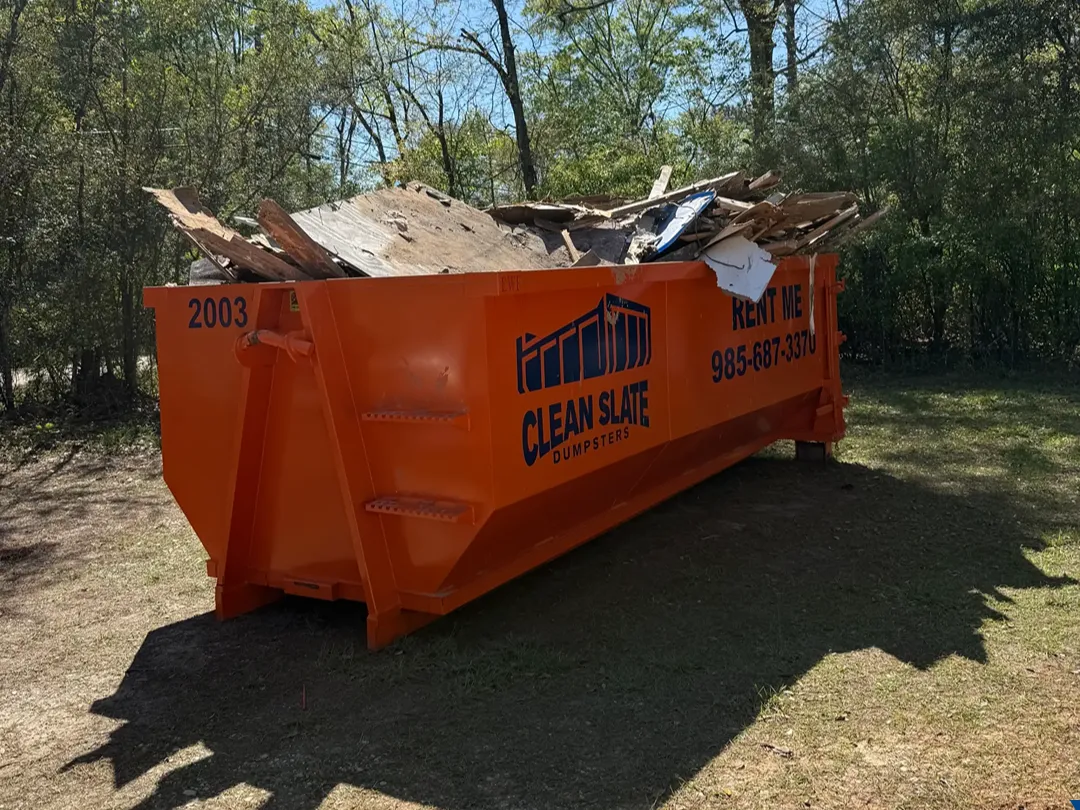
A roll-off takes almost all everyday junk and renovation debris: furniture, household clutter, wood, drywall, flooring, roofing, and yard waste. It cannot take hazardous materials, paint and chemicals, fuels, batteries, tires, electronics, or appliances with Freon. Those are banned by law and have to go to the right drop-off instead.
Renting a roll-off in Hammond, Ponchatoula, or anywhere in Tangipahoa Parish makes a cleanout or remodel simple. You fill it, we haul it. The one thing that trips people up is what is NOT allowed. A few wrong items can turn a smooth pickup into a rejected load, an extra fee, or a fine. This guide keeps you on the right side of it.
Need a dumpster you can actually fill with confidence? We will help you pick the right size and tell you up front what stays out.
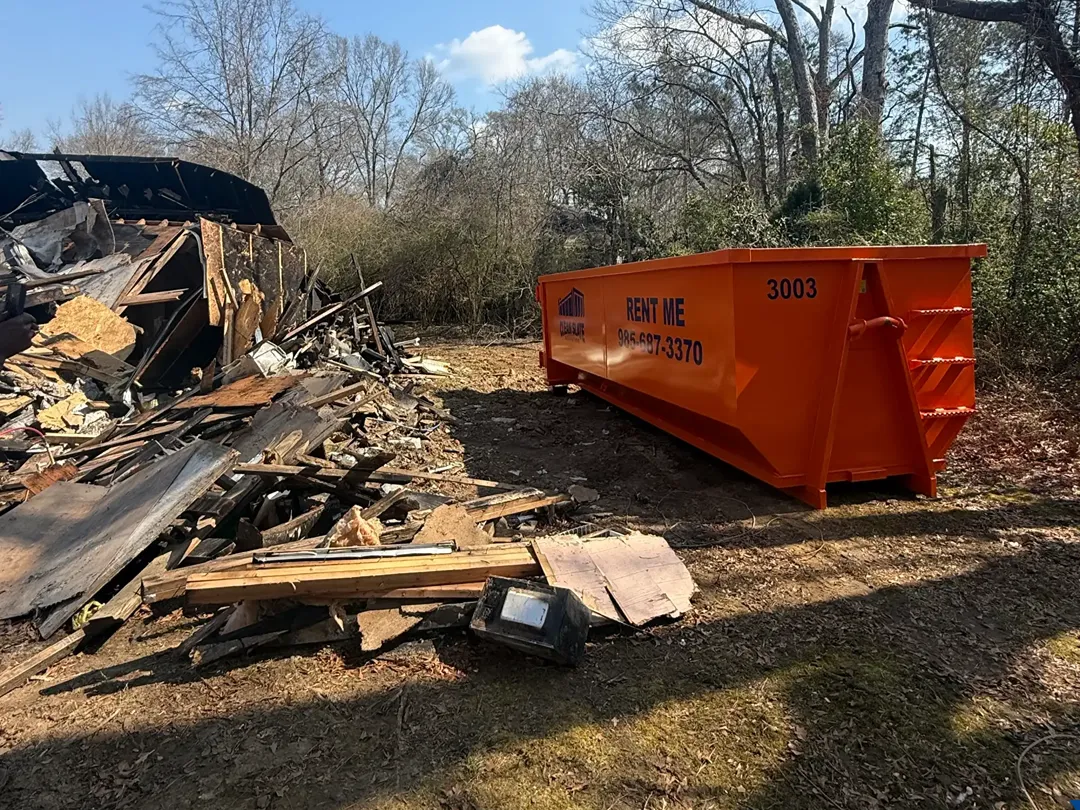
For most projects, the bin handles the bulk of what you are clearing out. A standard roll-off accepts general household junk like furniture, boxes, and clothing, plus renovation and construction debris.
That includes:
The local landfill backs this up. The Tangipahoa Parish Landfill in Independence is permitted for both household solid waste and construction and demolition debris, so the everyday cleanout and remodel materials above have a clear path to disposal.
Concrete, brick, asphalt, and dirt are allowed, but they are in their own category. They reach the weight limit long before the bin looks full, so a standard mixed-debris rental is the wrong tool for a load of broken slab.
Concrete weighs roughly 4,050 pounds per cubic yard, so just a few yards can blow past several tons. Our roll-offs include set tonnage: 1 ton on the 15-yard, 2 tons on the 20-yard, and 4 tons on the 30-yard, with overages billed at $65 per ton. For a heavy load, call us first. We will point you to the right setup so you are not surprised by an overage. The math behind sizes and tonnage is in our Hammond dumpster sizing guide.
These items are kept out of every roll-off for safety, environmental, or legal reasons. This is the part worth reading twice.
On appliances, the EPA’s Section 608 rules under the Clean Air Act make it illegal to vent refrigerant, so a fridge or AC unit has to have its Freon recovered by a certified tech before it is scrapped.
These are not just our policies. The state and parish set them.
The Louisiana Department of Environmental Quality regulates solid, hazardous, and waste-tire disposal. Two rules hit roll-off customers most often. Lead-acid car batteries are banned from land disposal under state law, and sellers must take them back for recycling. Whole waste tires cannot go in a landfill, which is why you pay a small waste-tire fee, $2.25 per passenger tire, at the point of sale to cover proper recycling.
The Tangipahoa Parish Landfill adds its own limits. It rejects hazardous waste, industrial oil and grease, agricultural chemicals, and regulated asbestos, caps citizens at five tires a day, and requires any paint to be fully dried and covered. When a banned item shows up in a load, it does not just disappear. It comes back to you.
Almost everything on the prohibited list has a free or cheap drop-off nearby. The dumpster is not your only option.
Auto-parts retailers take used car batteries, motor oil, and fluids for free. National programs at home-improvement and electronics stores collect household batteries, bulbs, and electronics. Tire dealers accept old tires because the recycling fee was already paid when you bought them. Latex paint can be dried out with cat litter, lid removed, and set at the curb, or donated if still usable. For solvents and chemicals, watch for a parish Household Hazardous Materials Collection Day.
Loading the wrong item is not a minor slip. It has a price.
A prohibited item typically triggers a contamination fee of $75 to $250 or more. If hazardous material reaches the landfill, the load can be returned to you and you can face a fine up to $500, on top of a possible rejected load and a re-haul. Keeping banned items out is the cheapest move you can make.
What belongs in the bin often depends on the job. Old metal and appliances are better routed through our scrap metal removal service, broken slabs and patios follow their own rules under concrete removal, and most mixed household loads fit a 20-yard roll-off. Clearing a tear-off instead? The roofing dumpster is sized for heavy shingles.
These are the questions Tangipahoa Parish renters ask us most before they start filling a bin. If yours is not here, call and we will answer it straight.
Usually yes, but confirm when you book. Some loads and landfills restrict mattresses or charge a small handling fee. We will tell you up front if your mattress can go in the bin or needs a separate plan, so there is no surprise at pickup.
Wet paint is treated as hazardous waste because it can contaminate groundwater. Dried-out, empty latex cans are generally fine. To dry latex paint, mix in cat litter or a hardener, remove the lid, let it solidify, then set it at the curb. Save oil-based paint and large quantities for a household hazardous waste day.
If we catch it before pickup, we will ask you to pull it out. If it reaches the landfill, it can trigger a contamination fee of $75 to $250 or more, a returned load, or in the case of hazardous material, a fine up to $500. When in doubt, leave it out and call us.
Tires go back to any tire dealer, since the recycling fee was already paid at purchase. Car batteries go to auto-parts retailers, which take them free for recycling. Both are banned from Louisiana landfills, so they cannot go in the dumpster.
In small amounts, sometimes, but heavy materials like concrete, brick, and dirt hit the weight limit fast. A few cubic yards can exceed several tons. For a heavy load, call us first, and we will set you up with the right container so you avoid a $65-per-ton overage.
Not with the Freon still in them. Federal law requires refrigerant to be recovered by a certified technician before the appliance is scrapped. Once it is certified Freon-free, it can go in the bin. We are happy to point you to a local recycler.
Ready to book a roll-off and load it the right way? Tell us your project, and we will match you to the right size, give you a flat quote, and walk you through what stays out. No surprises at pickup.