
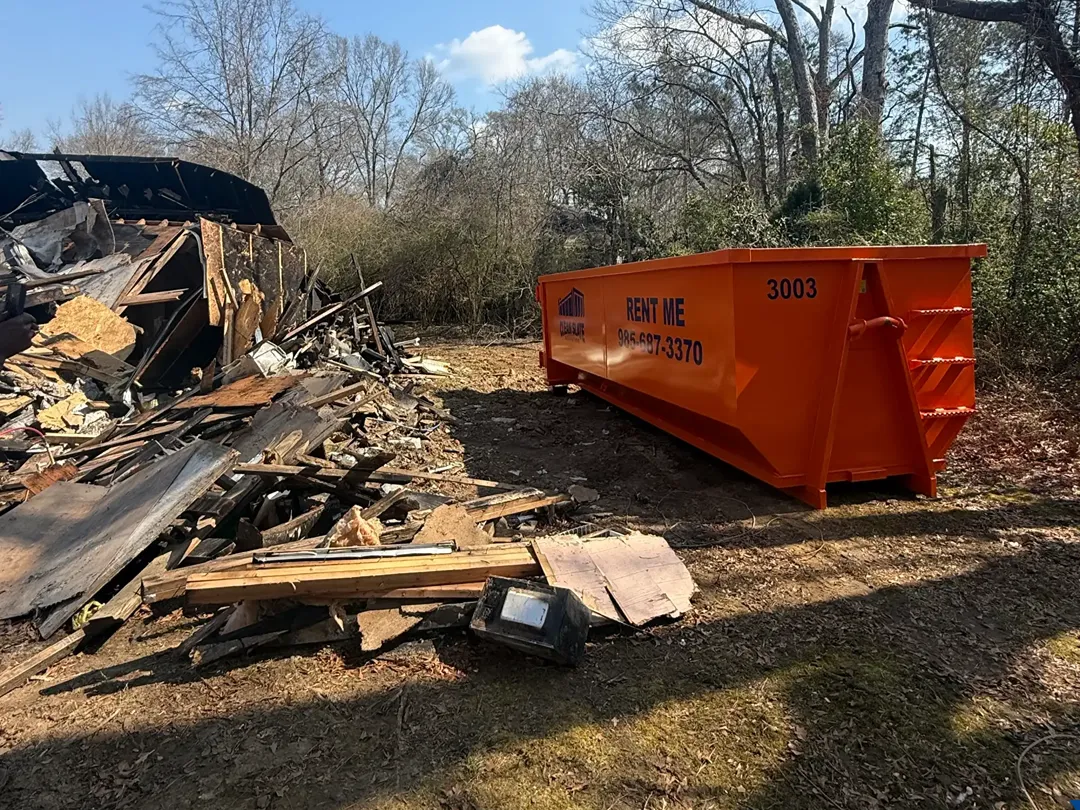
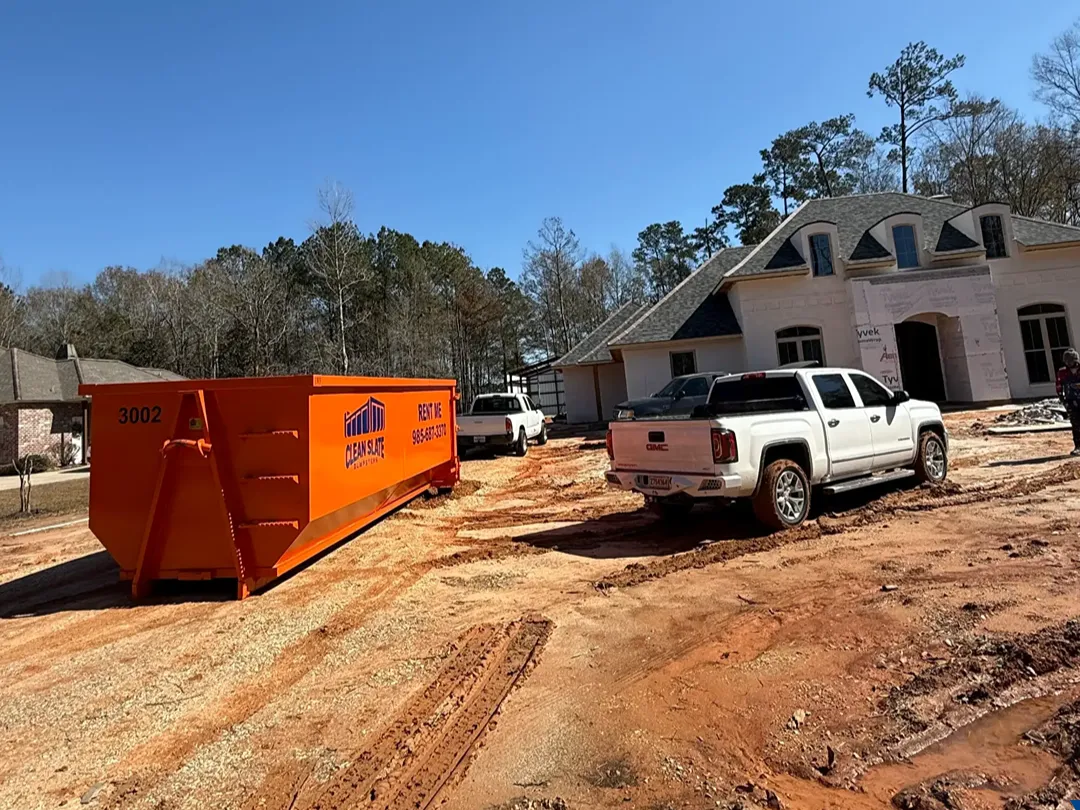
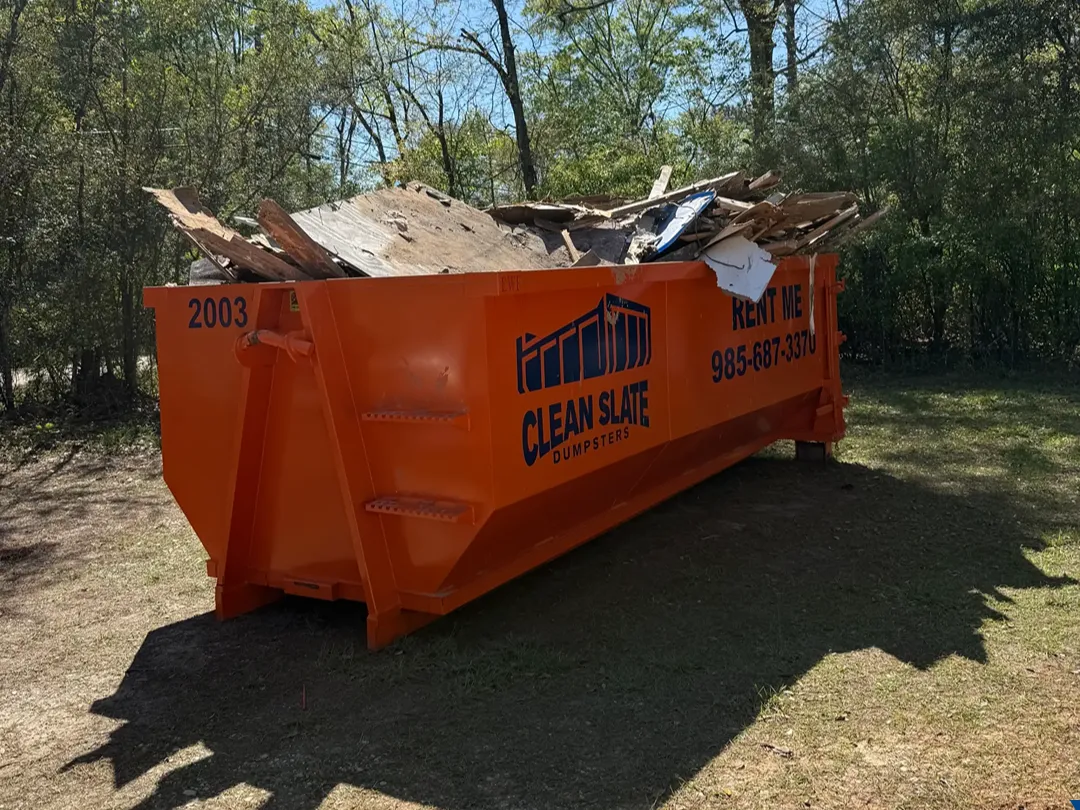
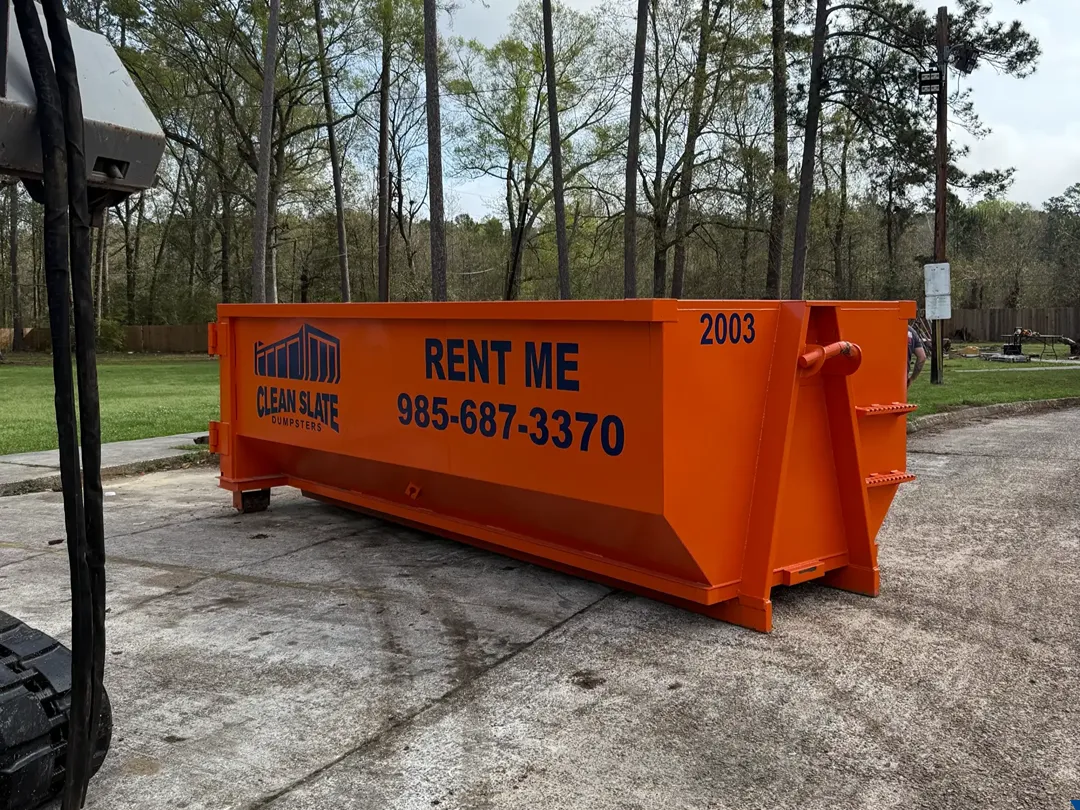
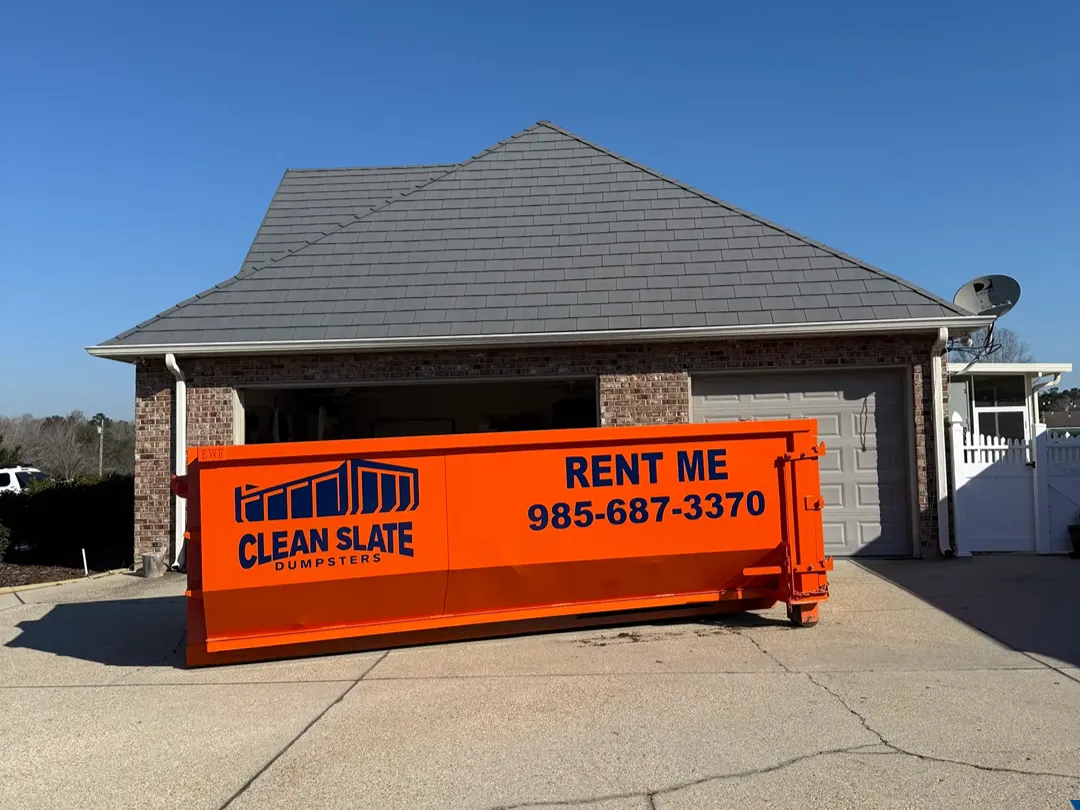
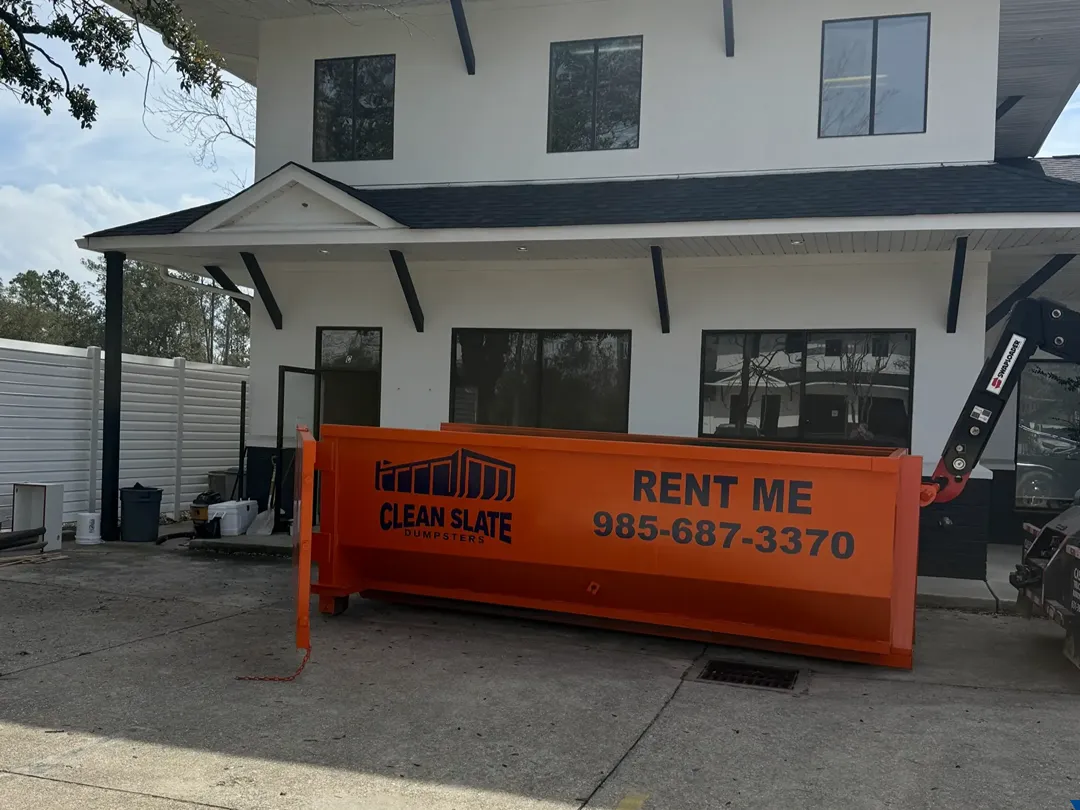
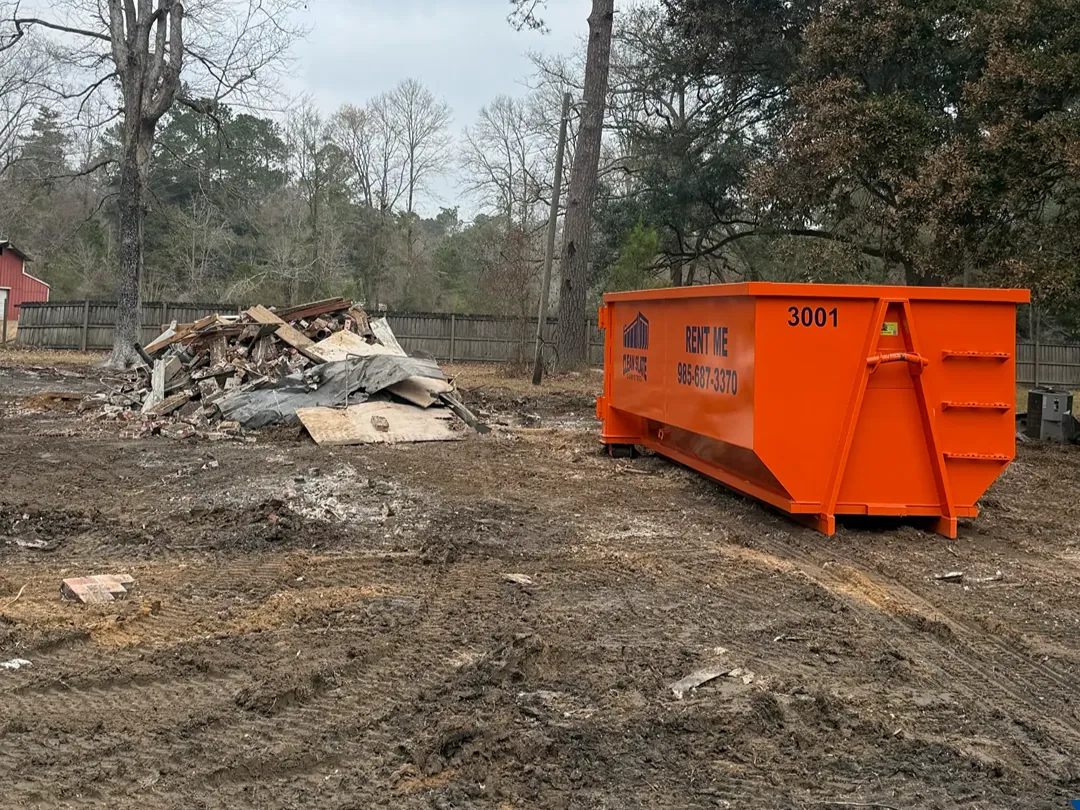
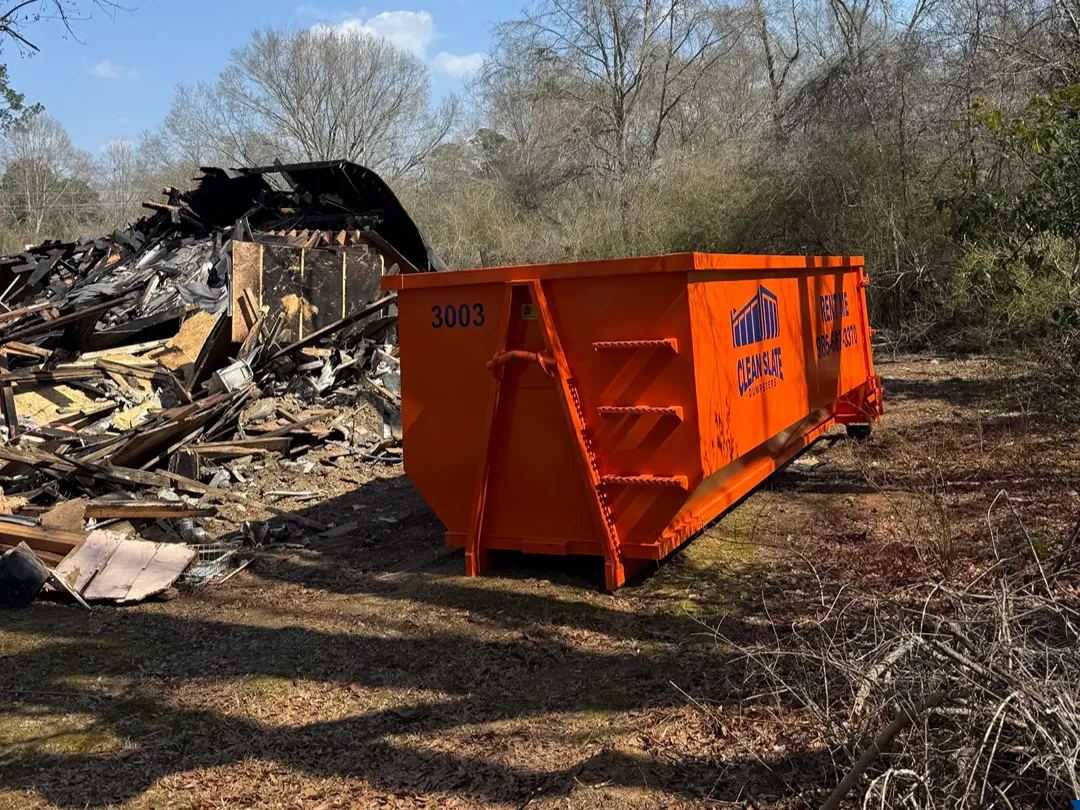
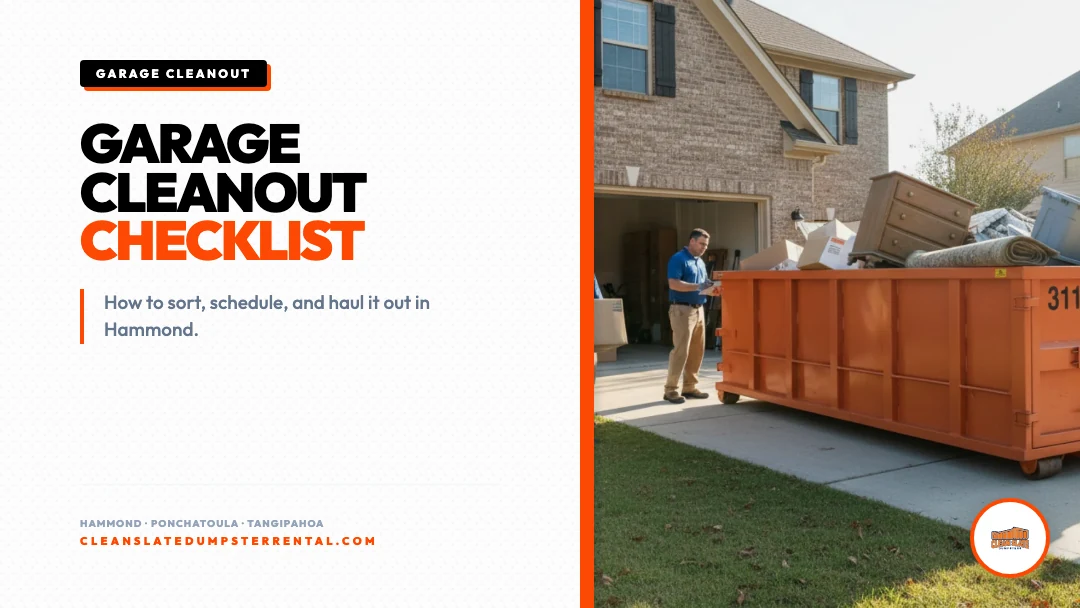
A garage cleanout works best in four steps: sort everything into keep, donate, sell, and toss piles, schedule one focused weekend, drop a roll-off dumpster in the driveway for the toss pile, then load it and book the haul-off. For most single or two-car garages in Hammond, a 15-yard dumpster handles the debris. You fill it on your schedule, and Clean Slate hauls it off. On time. No surprises.
Most garages in Tangipahoa Parish were built to hold cars, then slowly filled with everything else. Roughly two-thirds of U.S. homes have a garage or carport, and most new ones are built for two cars or more, per 2022 Department of Energy data drawn from the Census American Housing Survey. The car ends up in the driveway and the garage becomes storage. A weekend, a plan, and a dumpster fix that.
This checklist covers the whole job: how to sort, how to schedule it, what size dumpster fits a garage, what a roll-off can and cannot take, and how to book. If you want the wider picture first, our residential cleanout dumpster service in Hammond page covers availability and the service area.
Sorting is the whole job. Before you haul anything, move every item into one of four piles: keep, donate, sell, or toss. The rule that keeps it moving is simple. Touch each item once and decide.
Keep is for what you use and have a real spot for. If it has no home on a shelf or hook, it is not a keep. Donate is for usable items you no longer need: working tools, furniture, sporting gear, and household goods. Sell is for the few items worth real money, like a working mower or a power tool worth listing. Toss is everything broken, soaked, rotted, or worthless, and that pile goes in the dumpster.
Be honest about the donate pile, because it keeps usable goods out of the box and out of a landfill. Habitat for Humanity ReStores accept furniture, appliances, building materials, and household goods, and divert hundreds of tons from landfills each year. That matters more than it sounds: Americans generated 12.1 million tons of furniture and furnishings waste in 2018, and about 80 percent of it was landfilled, per the EPA’s most recent durable-goods data.
Work one zone at a time, left wall to right. Finishing a wall feels like progress and keeps the four piles from blending back together.
Block one focused weekend instead of spreading the job across stray evenings. A garage clears faster as a single push, because every restart costs you the time of re-sorting piles you already touched.
Plan the timing backward from haul-off. Reserve the dumpster so it lands Friday or first thing Saturday, sort and load through the weekend, and book pickup for early the next week. That gives the toss pile a place to go the moment you make a decision, so nothing drifts back to a shelf.
Line up help and supplies before day one. Heavy-duty contractor bags, work gloves, a box cutter, and a hand truck make the load go faster. A second person roughly doubles the pace, since one sorts while the other carries to the box.
Set a finish line you can hit. A single-car garage is a one-day job for two people. A packed two-car garage is a full weekend. Plan the size to the space so you are not racing a half-loaded dumpster on Sunday night.
A 15-yard roll-off is the right size for most garage cleanouts in Hammond. A single-car or lightly packed two-car garage rarely fills more than that, and the 15-yard is the most cost-effective box for the job.
A 15-yard holds roughly three to four pickup truck loads and starts at $349 with 1 ton included. Step up to a 20-yard only if you are clearing a deeply packed two-car garage plus an attic or shed in the same weekend, or if the toss pile carries heavy material like old concrete pavers or a pile of soaked plywood.
Weight is the part people miss. A garage looks like light junk, but a few old appliances, a workbench full of paint cans, and stacks of wet cardboard add up on the scale. If your toss pile leans heavy, our guide to dumpster weight limits and how overage fees work explains what common debris actually weighs.
When you are caught between two sizes, size up. The overage fee on a too-small box usually costs more than the next size up. For a full breakdown across project types, see our Hammond dumpster sizing guide.
Most garage clutter loads straight into the box. The exceptions are hazardous materials, which the law routes to separate facilities, so it pays to pull those out during the sort instead of at the landfill scale.
Accepted items cover almost everything a garage holds: broken furniture, old shelving, bikes and toys, scrap wood and drywall, bagged junk, cardboard, most appliances, and dried latex paint. If it is solid household debris, it goes in.
Not allowed in a roll-off: motor oil, gasoline, and other petroleum products, propane tanks, wet latex paint, household chemicals and solvents, and tires beyond local limits. Electronics like old TVs, monitors, and computers often need separate e-waste handling, so check with Tangipahoa Parish solid waste before you load them.
One garage-specific tip: half-used paint cans pile up fast. Spread wet latex paint thin on cardboard, let it dry, and it loads as regular debris. When you book, confirm the prohibited list for your specific load, since rules can shift by material.
A few minutes of driveway prep keeps delivery smooth and your concrete safe. The driver needs clear, straight access and a flat, firm spot, so the day before delivery is the time to make room.
Clear roughly 60 feet of straight approach so the truck can back in and set the box near the garage. Move cars and trailers, and note any low branches or cable lines along the path. Pick the flattest spot you have, since a loaded roll-off sits heavy.
Ask about driveway protection boards before delivery. Those boards sit under the container and spread the load so the dumpster does not mark or crack your driveway. That is a real difference from a national broker dropping a box sight unseen.
When the weekend is done, one call books the pickup. Clean Slate weighs the load at the landfill, so the final charge reflects actual tonnage, never a guess. You can see flat pricing with the tonnage included on every size before you reserve.
These are the questions Hammond and Tangipahoa Parish homeowners ask us most before they clear out a garage. If you are stuck between two dumpster sizes, the weight notes above tell you which way to lean.
A 15-yard is the right size for most single and two-car garage cleanouts in Hammond. It holds roughly three to four pickup truck loads and starts at $349 with 1 ton included. Step up to a 20-yard only if you are clearing a deeply packed two-car garage plus an attic or shed, or if the toss pile is heavy.
Plan one focused weekend. A single-car garage is a one-day job for two people, and a packed two-car garage runs a full weekend. The work goes faster when you sort into four piles first and load the toss pile straight into a dumpster in the driveway.
Set usable items aside and route them to a local donation center. Habitat for Humanity ReStores accept furniture, appliances, building materials, and household goods, which keeps good items out of the box and out of a landfill. Sorting a donate pile also shrinks the toss pile, so a smaller, cheaper dumpster often does the job.
No. Wet latex paint, motor oil, gasoline, propane tanks, and household chemicals are not allowed in a roll-off and route to separate facilities. You can dry out wet latex paint by spreading it thin on cardboard, and once it is fully dry it loads as regular debris.
Yes. Broken furniture, shelving, washers, dryers, and most appliances load fine. Refrigerators with active Freon may need separate handling in some cases, so mention them when you book. Pulling these out of the garage is what makes room for the car again.
It does not have to. Ask for driveway protection boards before delivery. They sit under the container and spread the weight so a loaded roll-off does not mark or crack the surface. Clearing a flat, firm spot for placement also helps.
Ready to clear out the garage this weekend? Tell us the project and we will match you to the right size with the tonnage and price stated up front. On time. No surprises.